
Generational Differences
just...200...more...cfs

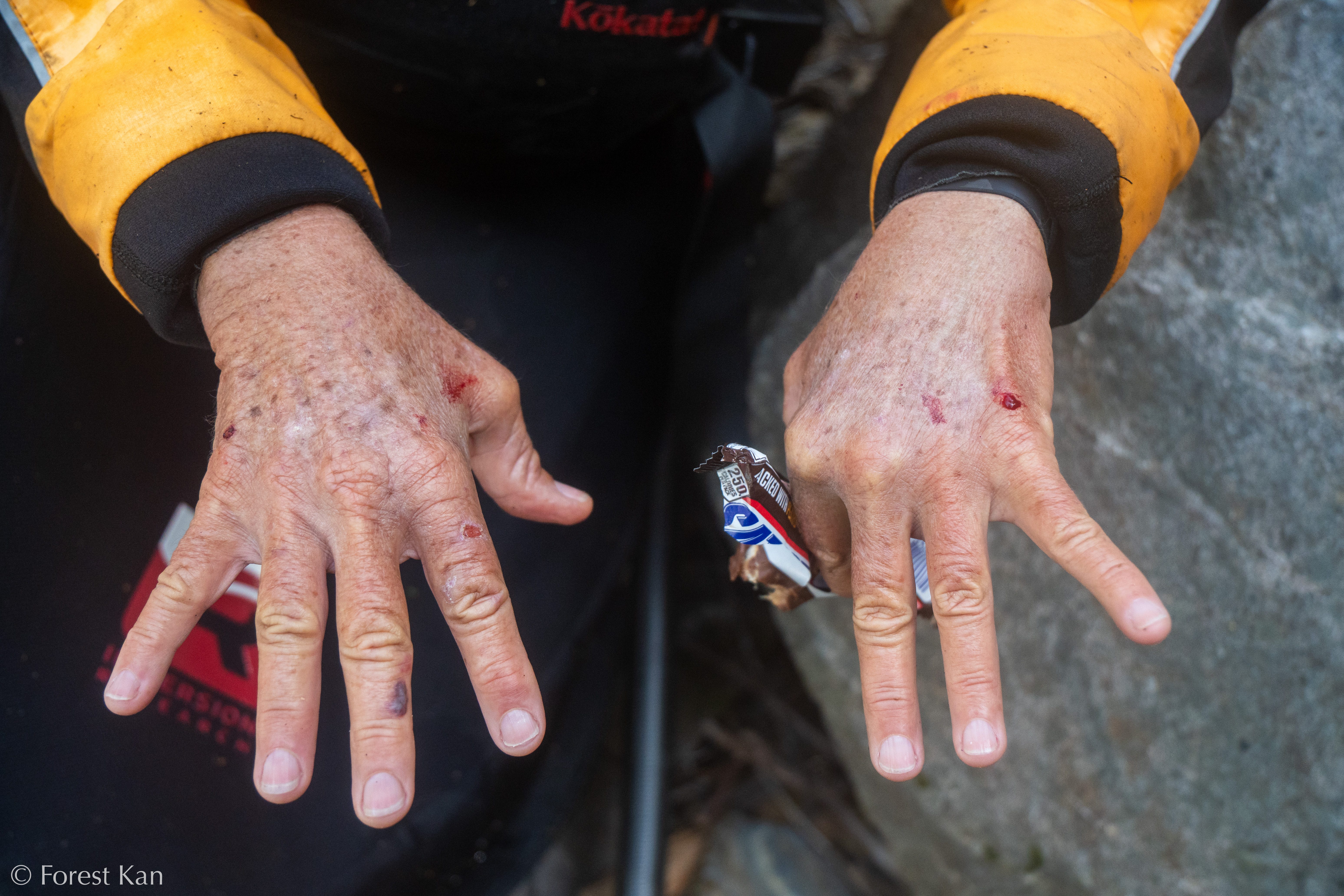
FUCK! I scream in my head as my hand plunges through the dense foliage and into a blackberry thicket. Add that to the already long list of hand injuries this trip has caused so far. At least it’s not poison oak…
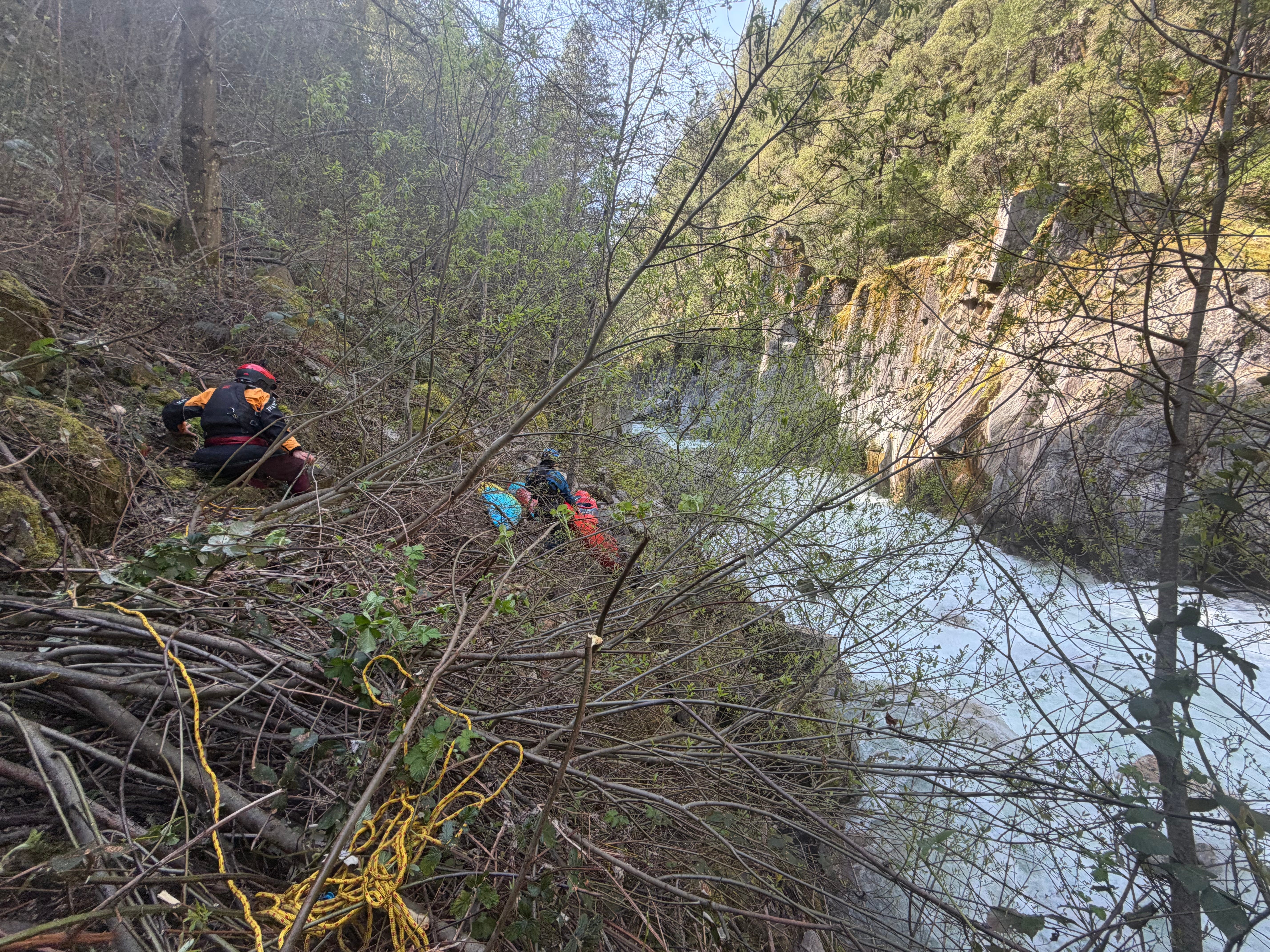
I can’t tell if my drysuit is leaking, or if I’m bathing in my own sweat; either way, it’s disgusting. But there’s no time for self-pity, we’ve got four fully loaded creek boats (each pushing 80 pounds) waiting to be traversed across this steep slope of blackberry brambles.
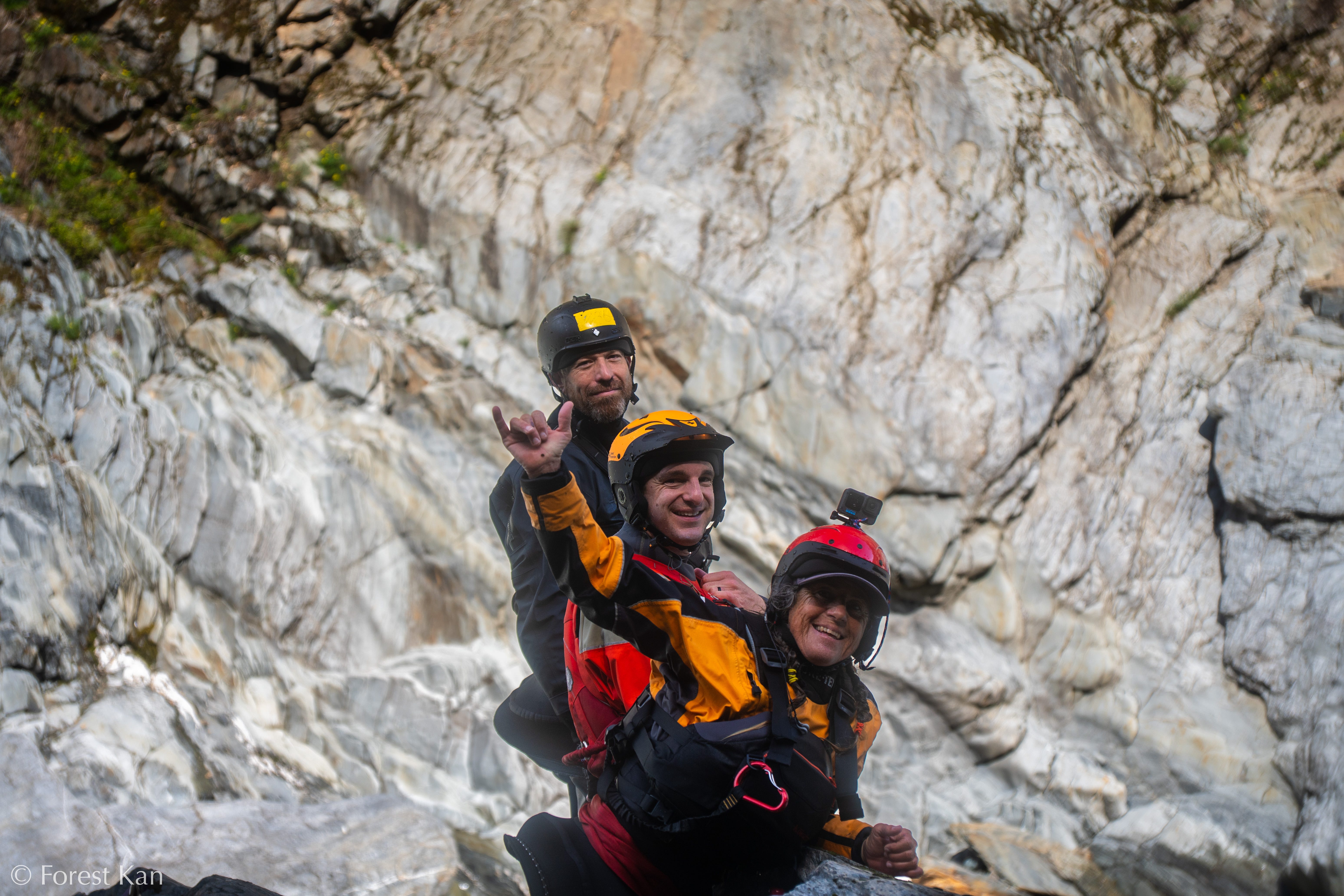
I let out a big breath and buckle down for the heavy lifting (literally) to get the team safely past Dream Gap 2, a sievey 15 footer that lands on rocks. Besides, each member of the team has already contributed greatly. Michael, the probe, Polly the steadfast line slayer, and Justin the eternal fountain of smiles and great attitude. If I can’t be confident enough to blindly drop horizon lines for the team, the least I can do is put some elbow grease into this portage from hell.
After a hot, frustrating, and thorny hour and a half, the portage is done. We’re one rapid away from exiting Dream Gap, and a short 18 miles away from tacos and burritos. All that stands in the way is Dream Gap 3, of which our scout is heavily obstructed by this walled out gorge we so willingly fought through the brambles to negotiate.
*buzz*
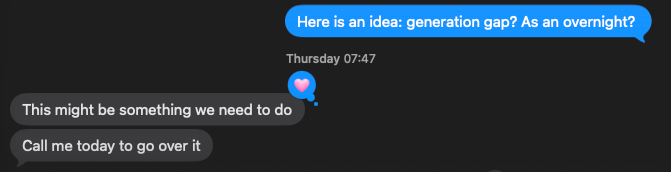
My phone vibrates on desk, pulling my concentration away from the endless emails and presentations typical for a Thursday. Justin says he’s in. We just need a crew.
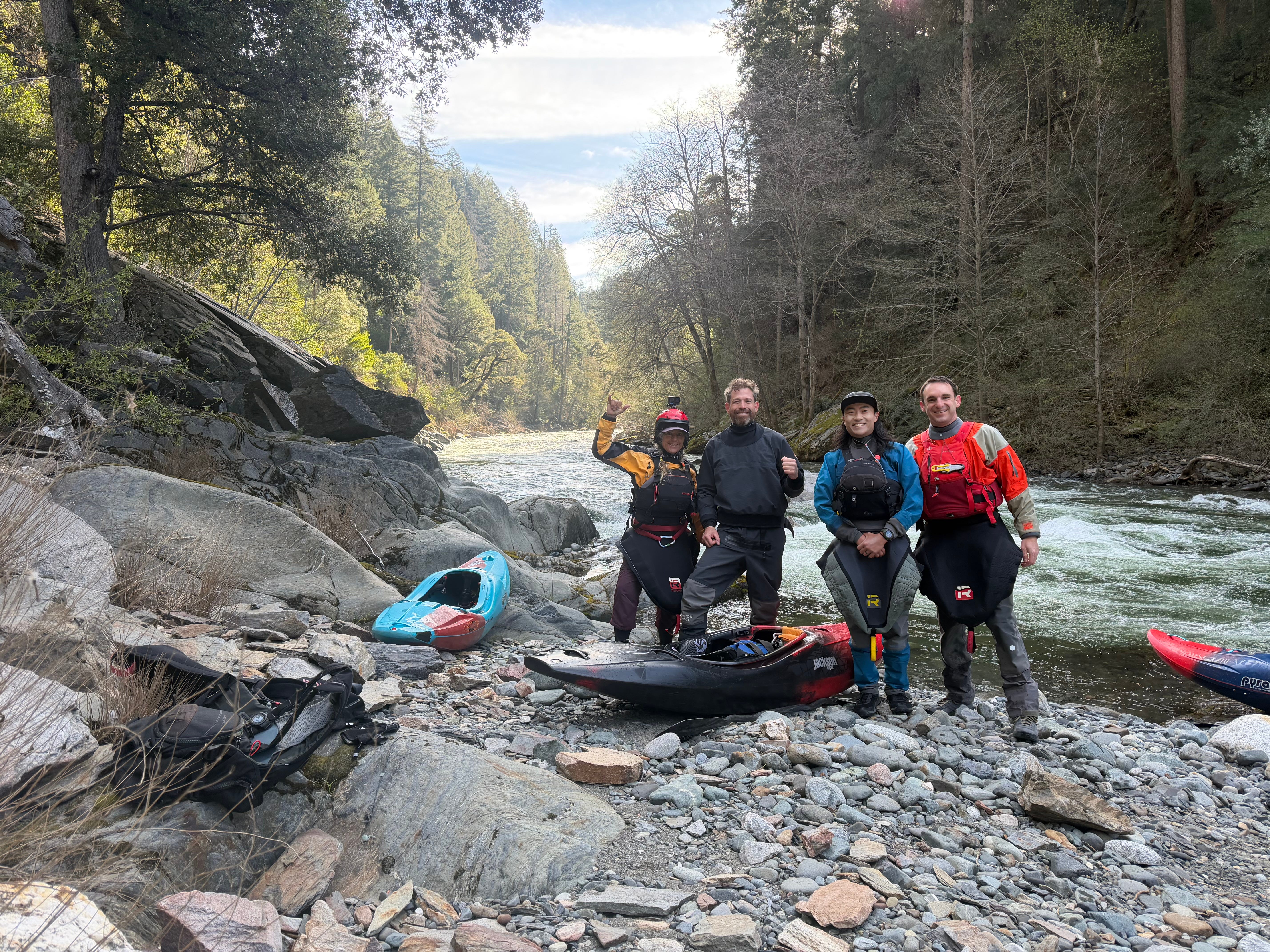
After a day or two of searching, we dial in the team - Michael Didier, Polly Green, Justin Macklin, and myself. All of us had never been into Generation Gap, but were all likewise curious and willing. Minimal beta exists for this run, yet we decided to take the leap and commit ourselves to an adventure.
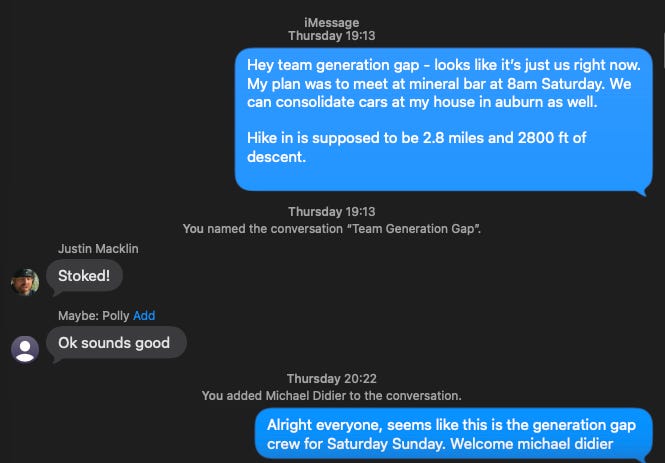
We shoot for a meeting time of 9am at Mineral Bar, a little later than originally proposed to give folks time to make the drive from out of town.
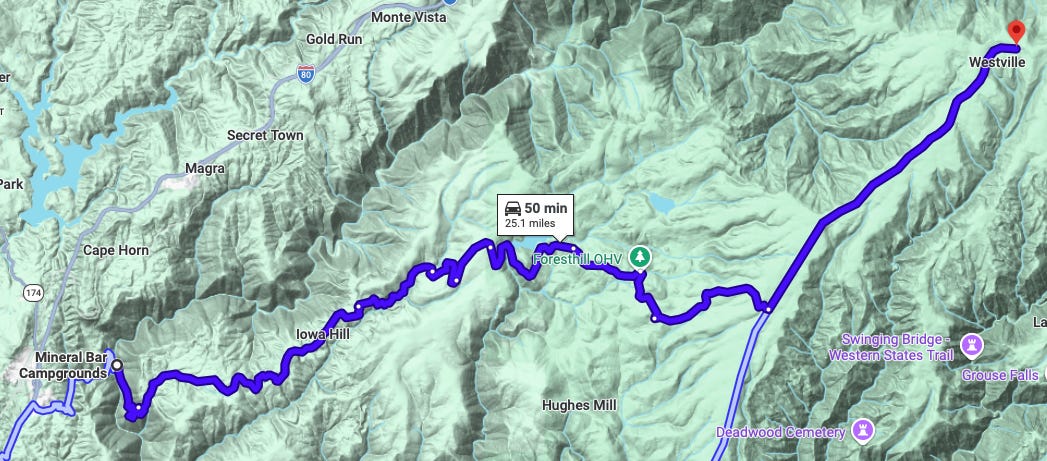
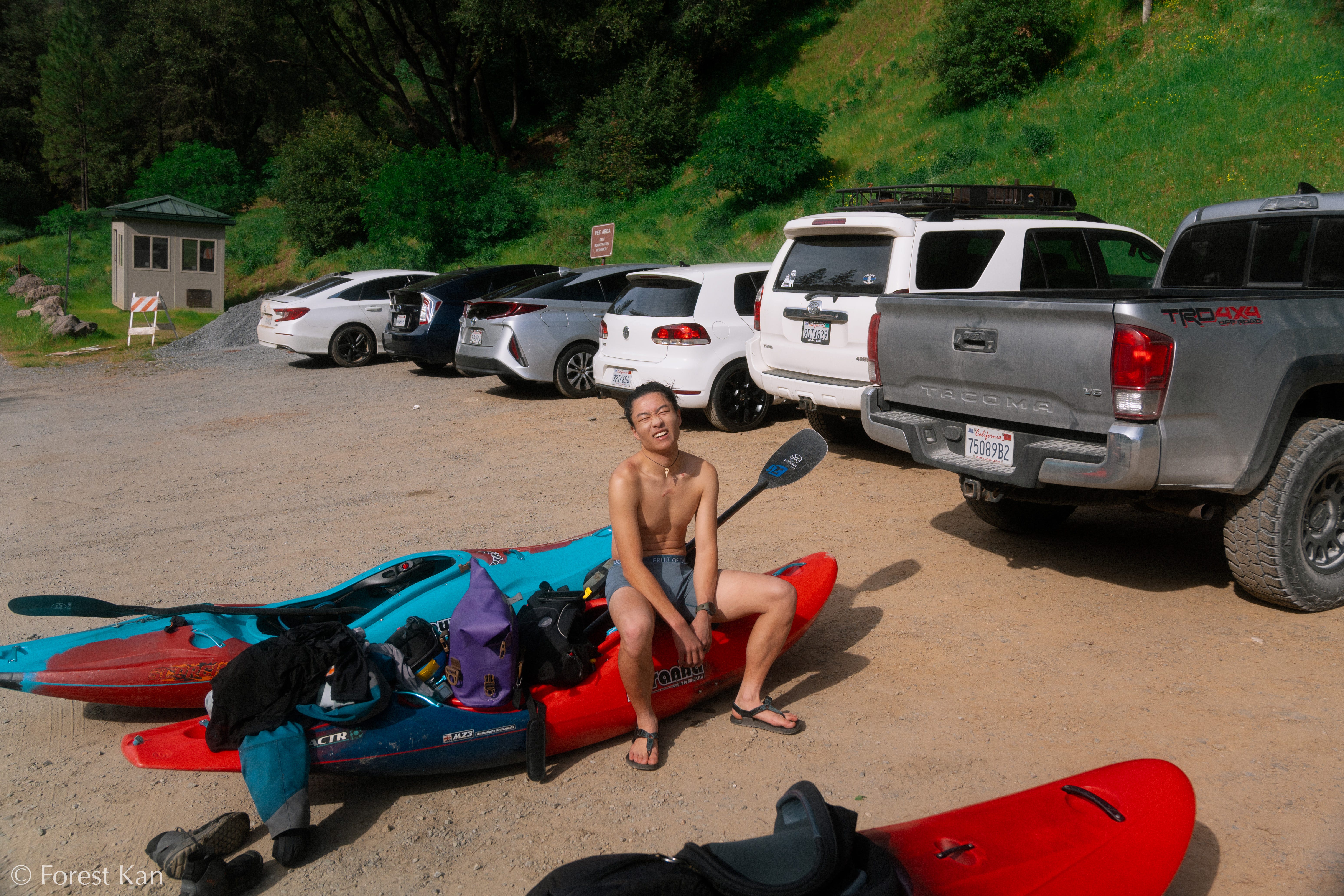
9am comes and goes and we end up loading up for the shuttle around 9:30 then at the put in by 10:25. The shuttle winds across Iowa Hill road, familiar haunts back in my gravel bike days. We hit Foresthill road and it’s smooth sailing. Luckily the Foresthill road gate is open, and no snow is to be found. We make it to Mumford Bar trailhead, spirits high seeing as we’re in the wonderfully lush pine forest that accompanies the 5000-6000 ft elevation range. A quick pack up and we’re on trail by 10:50.
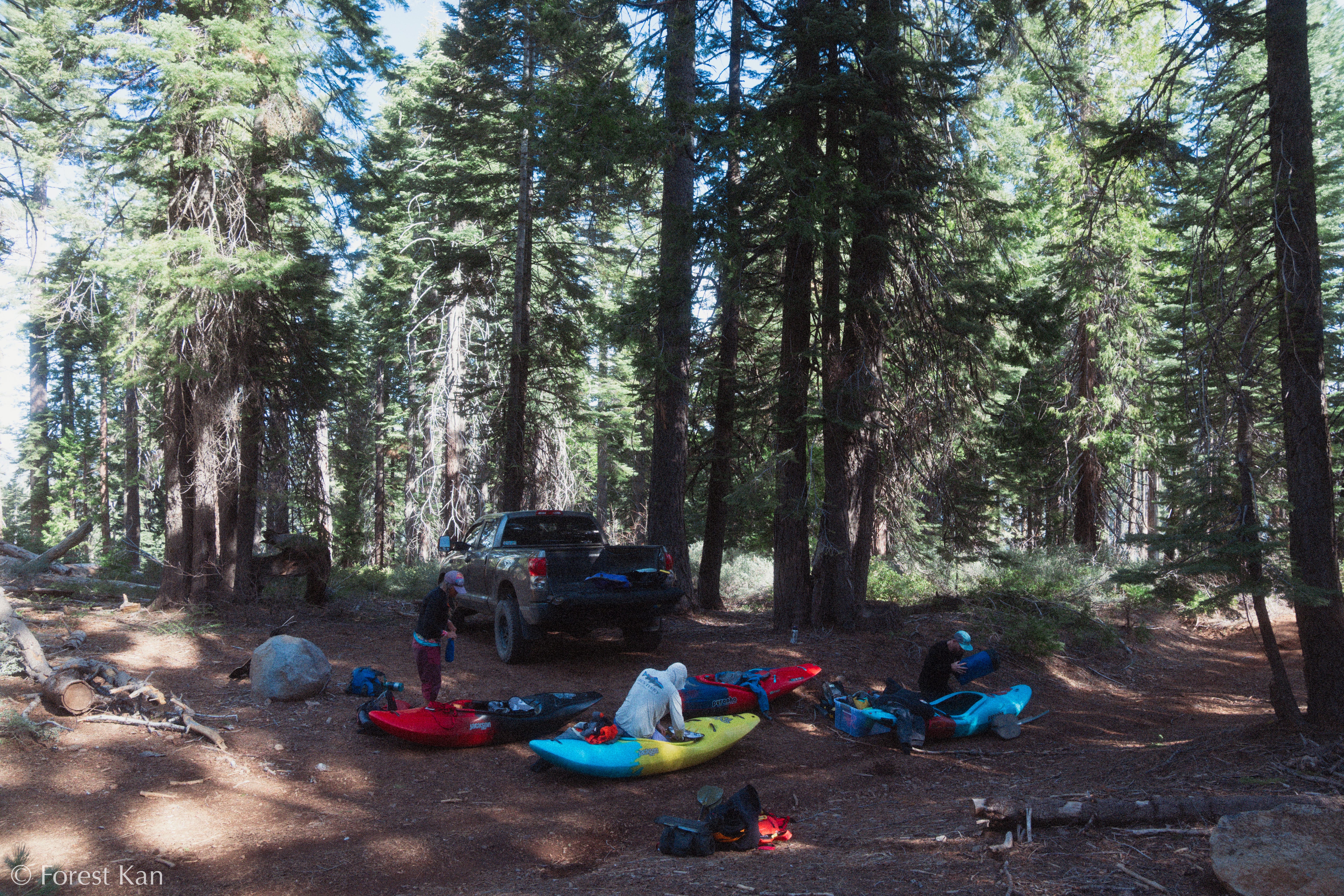
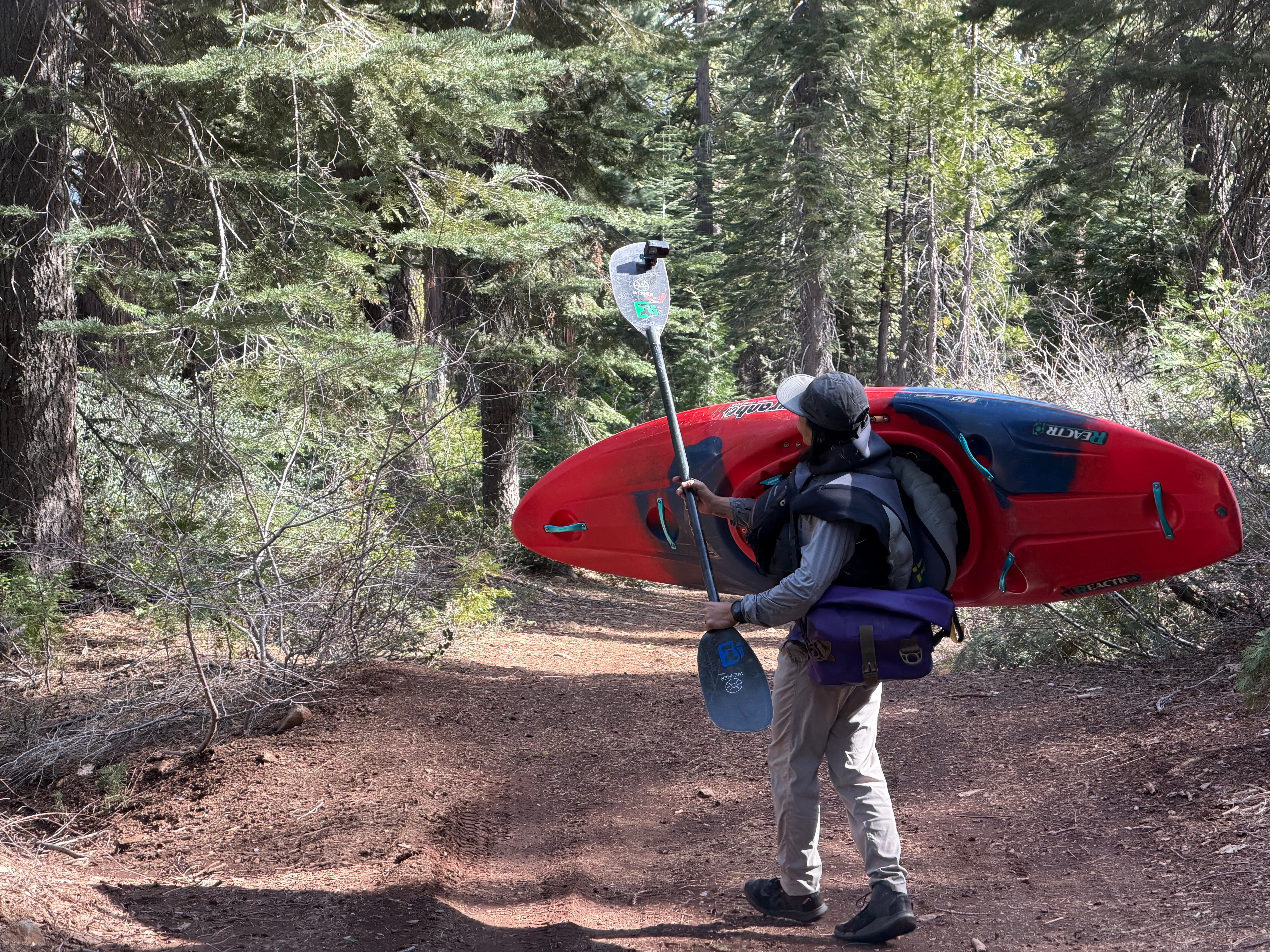
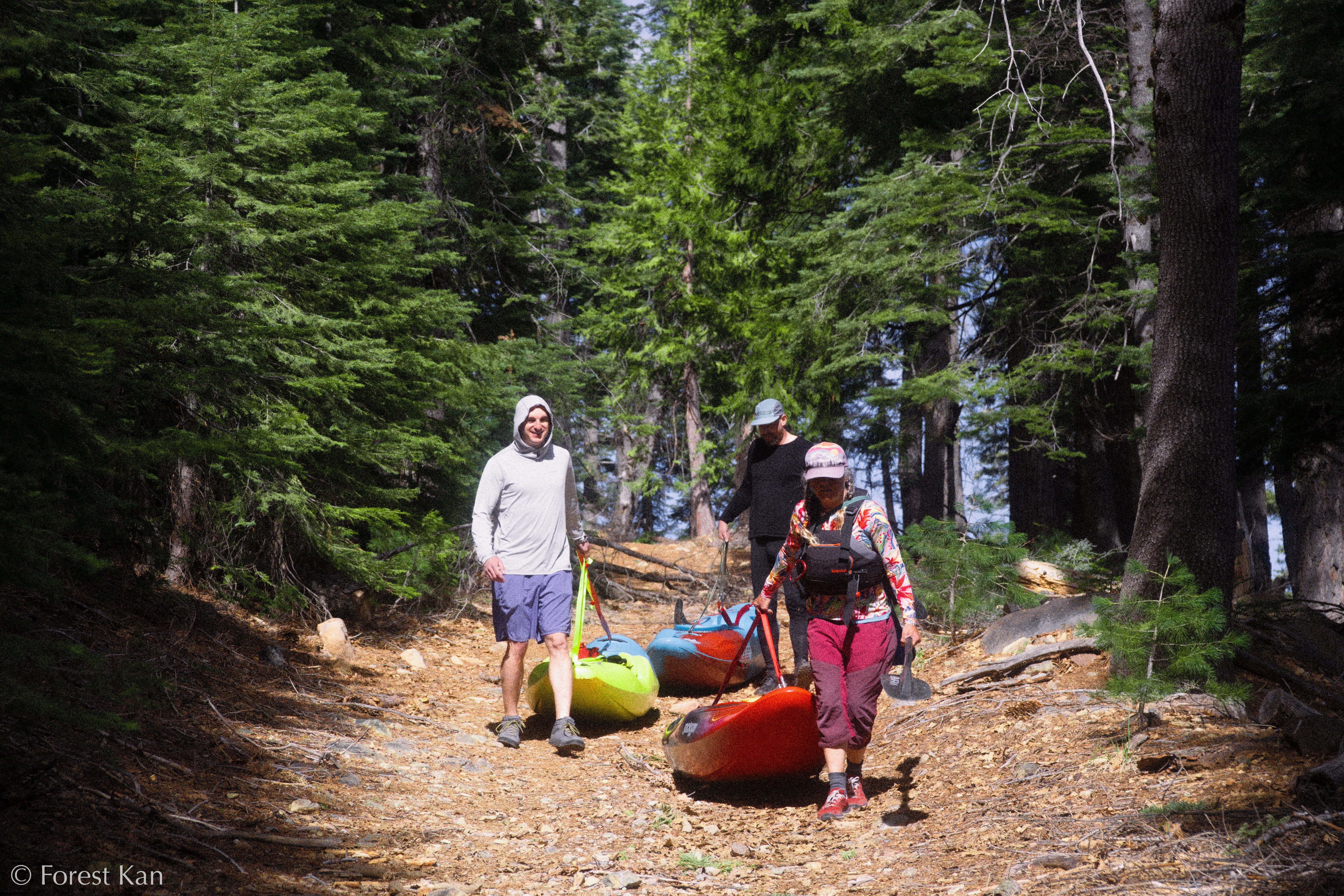
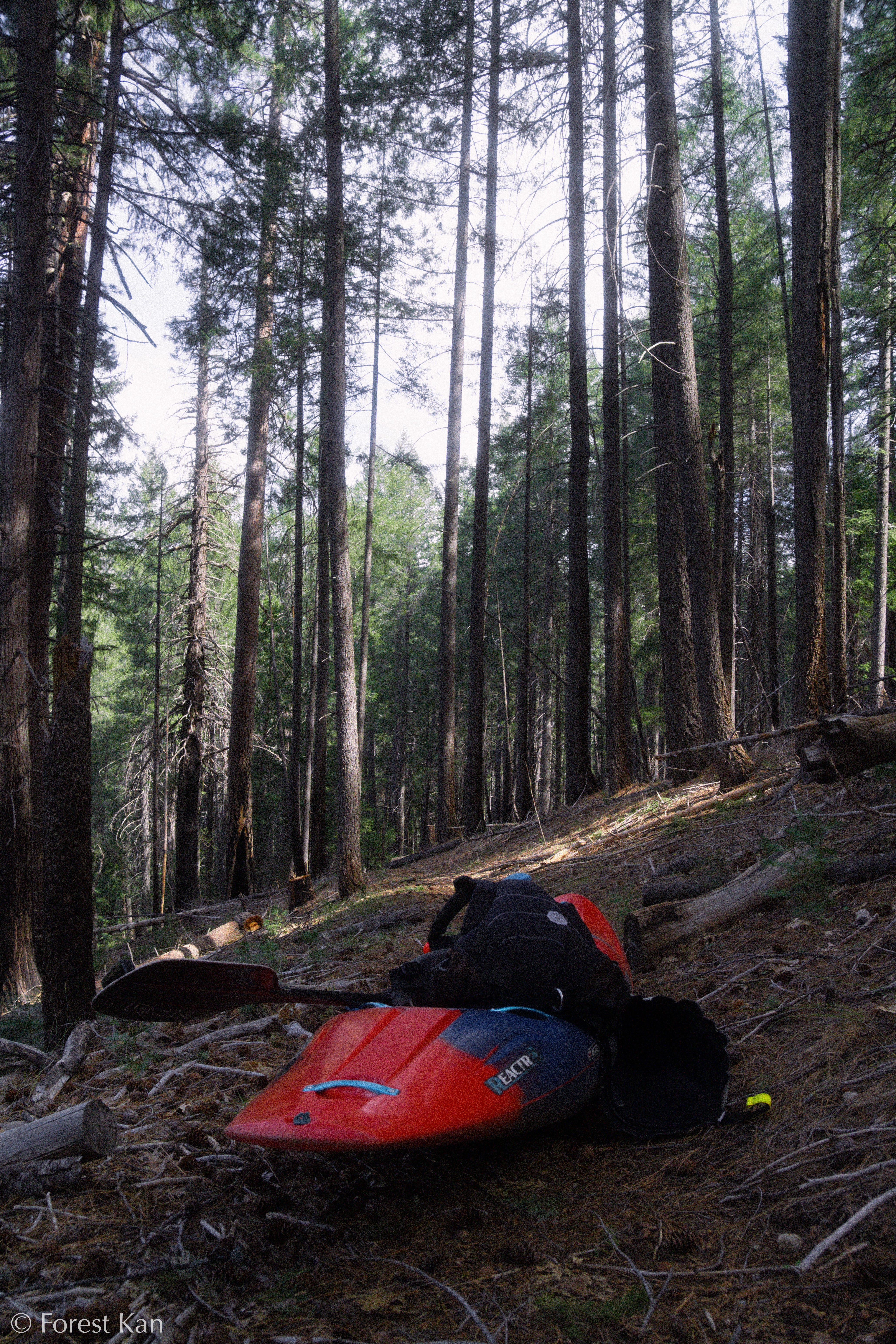
The hike moves quickly, minimal downed trees (less than 20 on the whole trail!), a wonder of chance for a trail that sees such few boots on the ground. As we descend, the poison oak appears. At first, it’s small bushels here and there off the trail. Soon, I’m forced to carry my boat as my extremely justified urushiol paranoia kicks in. I fight to dodge each juicy leaf of poison oak, setting my 80 pound boat down when I’m able, dripping from sweat but unwilling to disrobe for fear of ticks and month long rashes.
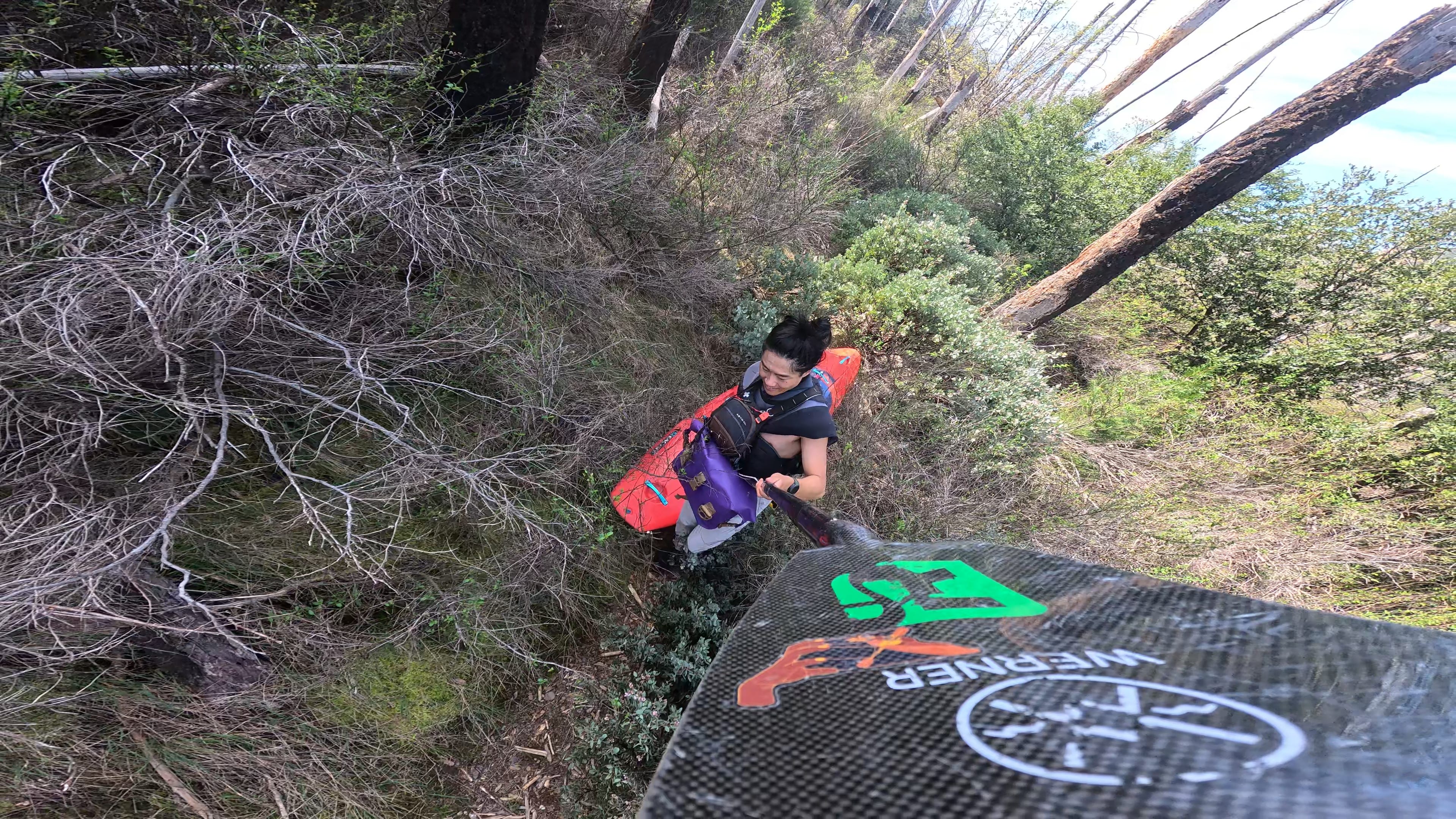
Alas, the overbearing poison oak lets up, replaced by thickets of blackberry brambles protruding out into the path of travel. Thorns grab at anything they can see, snagging my now long hair, leaving me cursing myself for not sticking with a buzz cut.
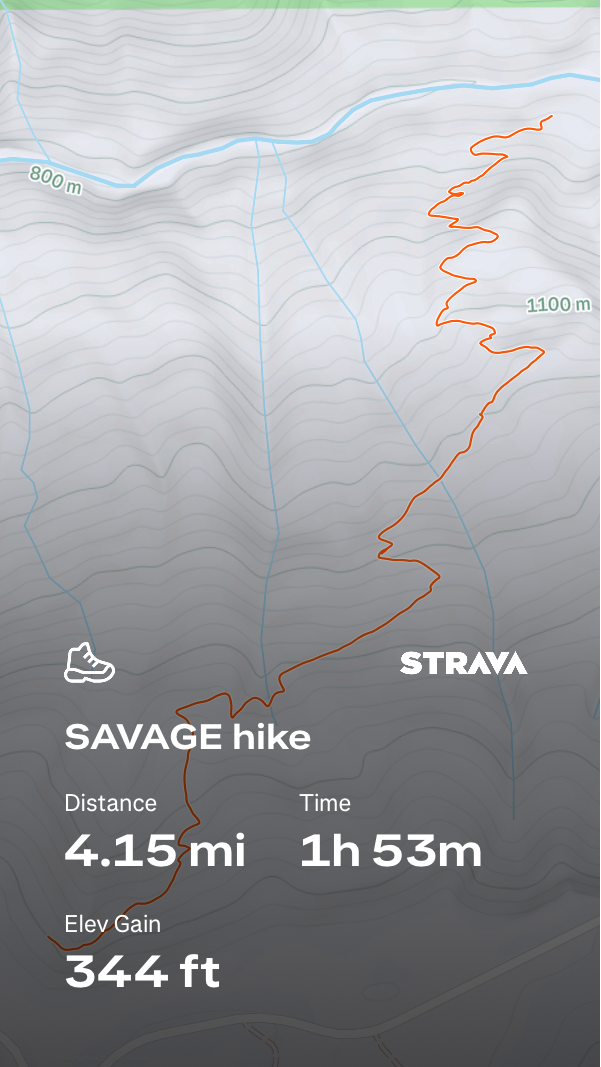
Many sweaty minutes and a mile or so later, the brambles let up and I’m greeted by a fire ring, with the river just 50 feet below me. I set my boat near the water and retrace my steps to find my companions, meeting them as they emerge from the brambles haggard and beaten after four miles, three hours, and 3000 feet of descending with loaded boats.
We take a second to pat ourselves on the back for our resilience then look towards the river. Just past put in, the river takes a hard left and drops off a horizon line. No warm up, I guess. Add to that it’s already 2:30 pm, and we feel the urge to put on and get moving.
We scout (the first of many) the drop and I take the easy walk, not willing to deal with a hole of that size so early in the day. Michael finds a creative line that allows him clear passage to the only small tongue I can see, and Polly follows suit, nailing the lines. Justin and I look at the lines laid and decide it’s too late to run it since our boats are already at the bottom. Too bad, as Polly and Michael made it look smooth.
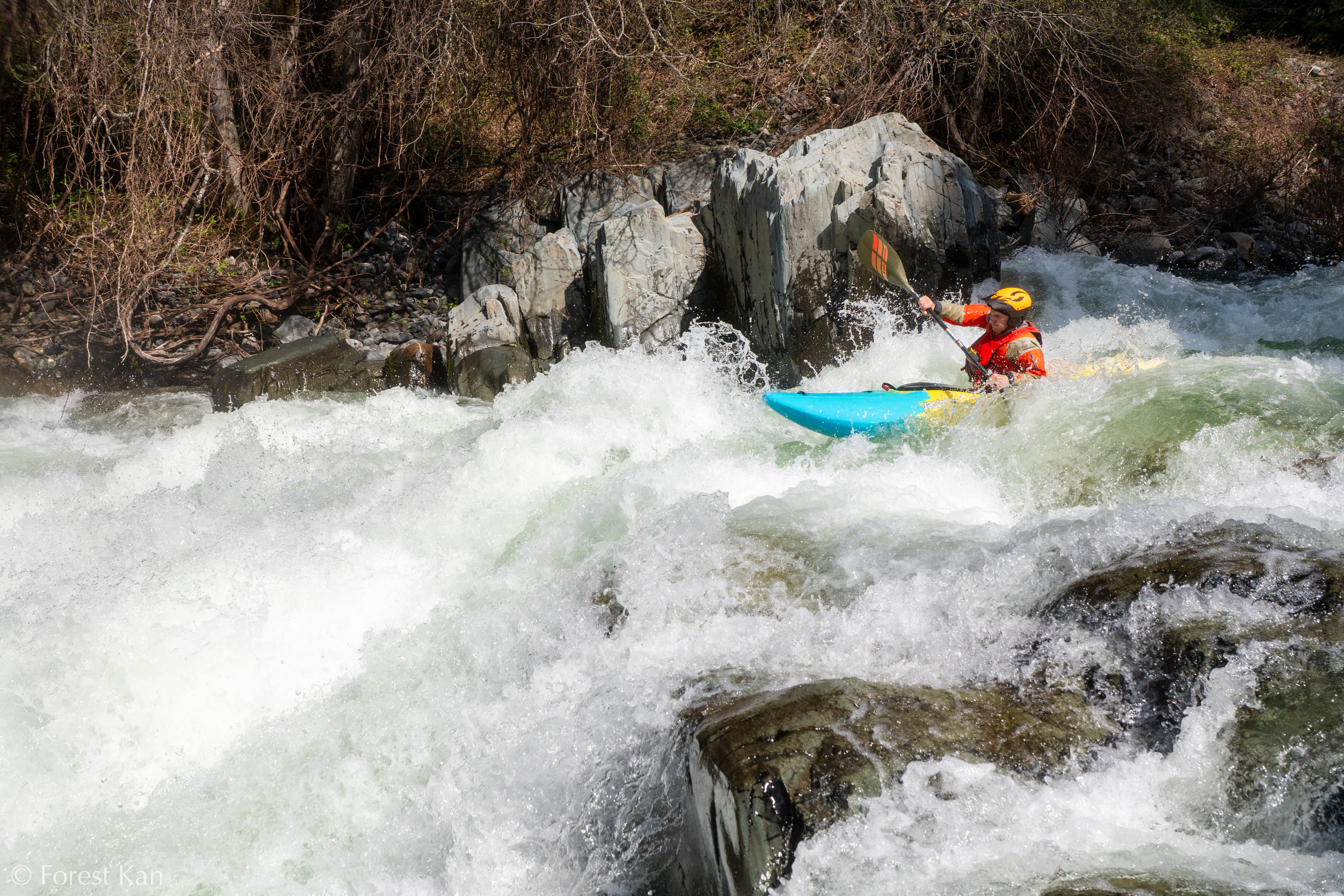
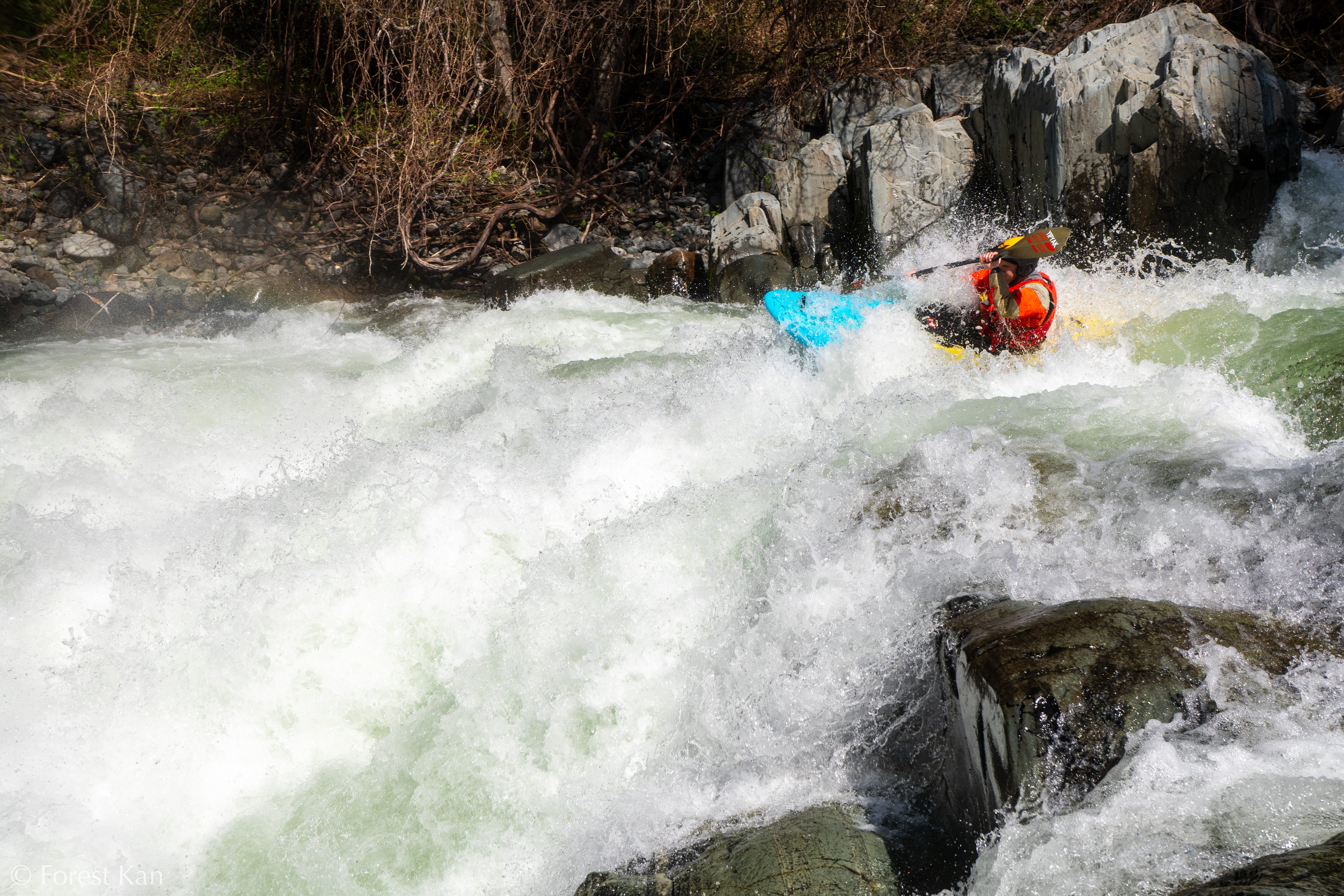
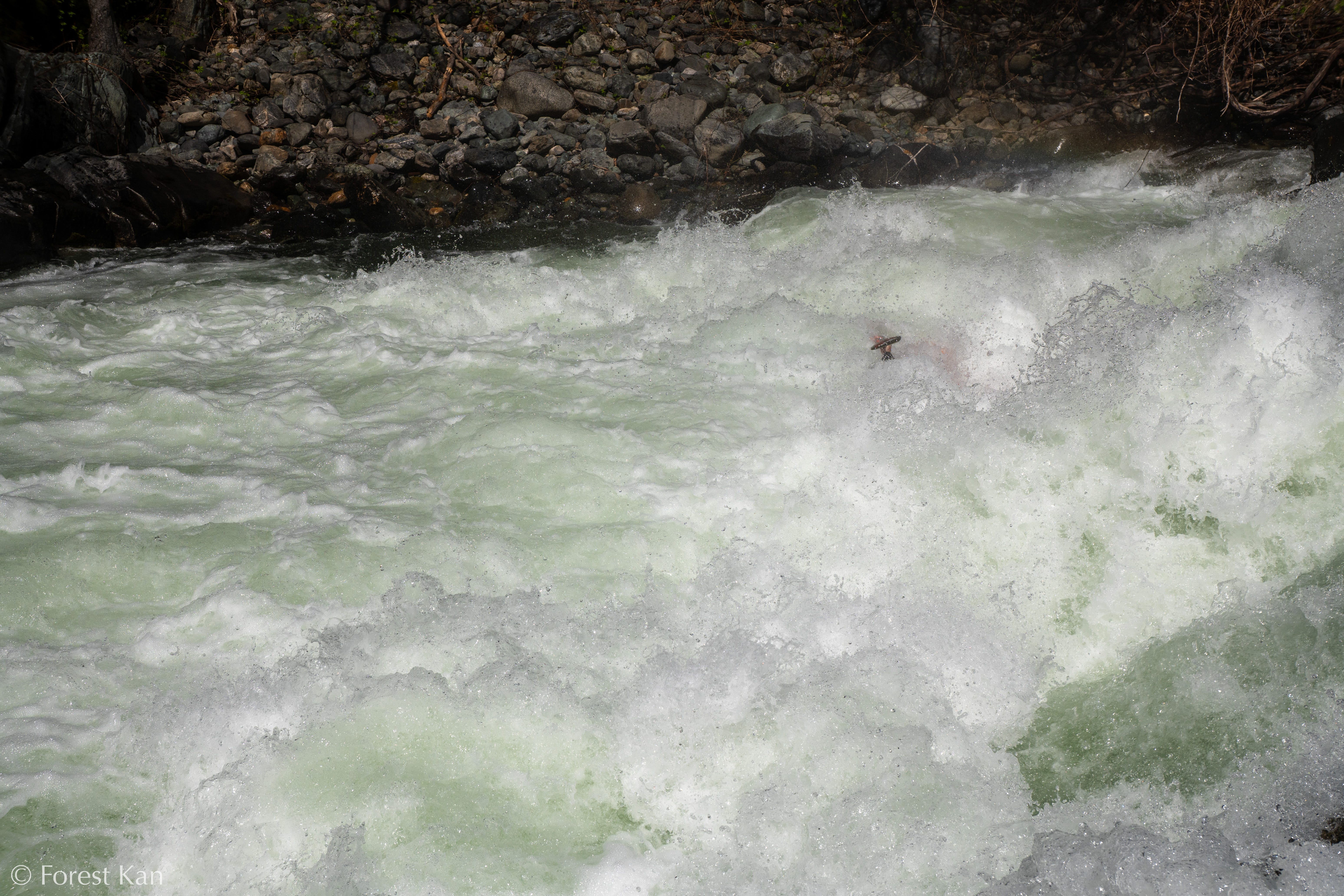
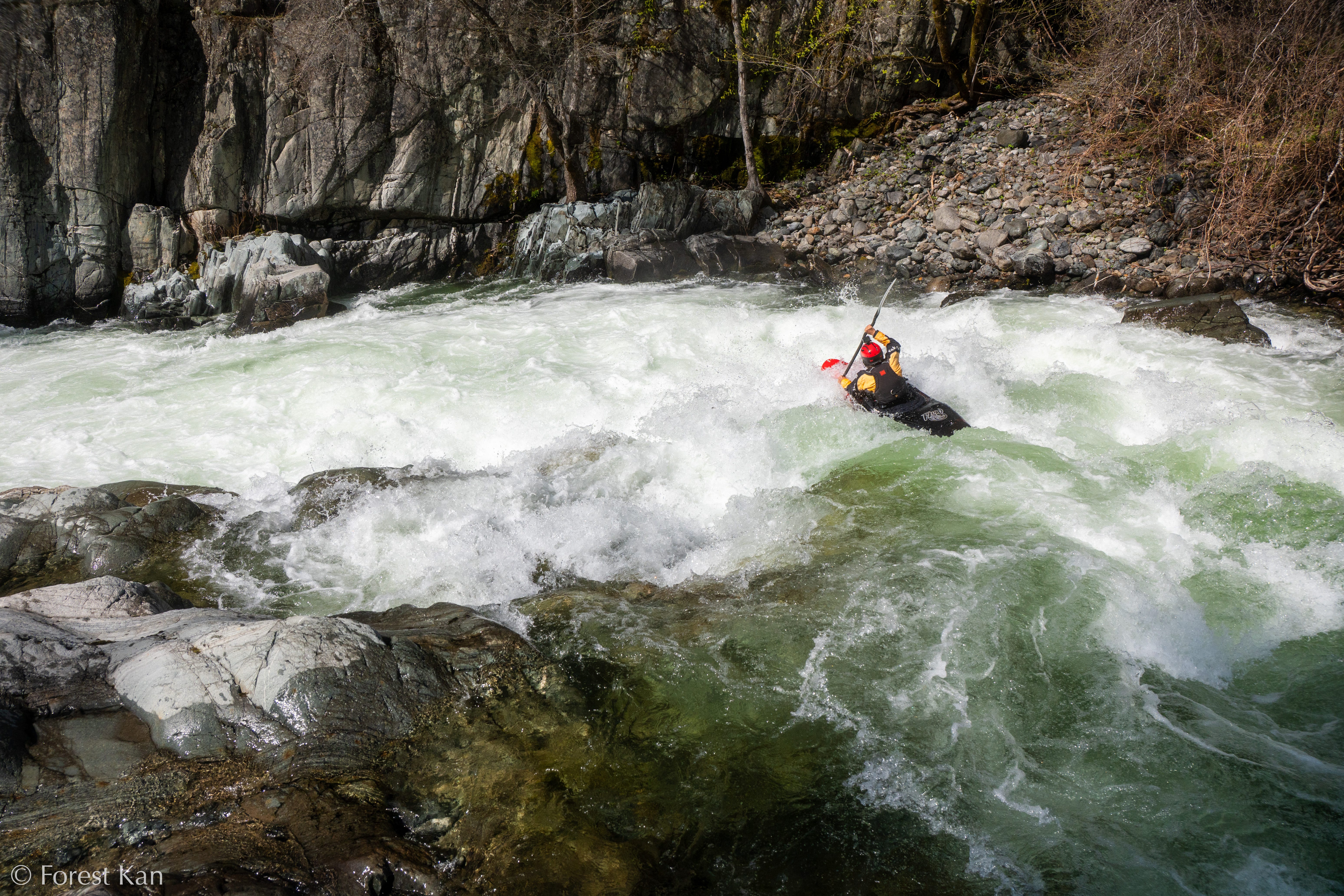
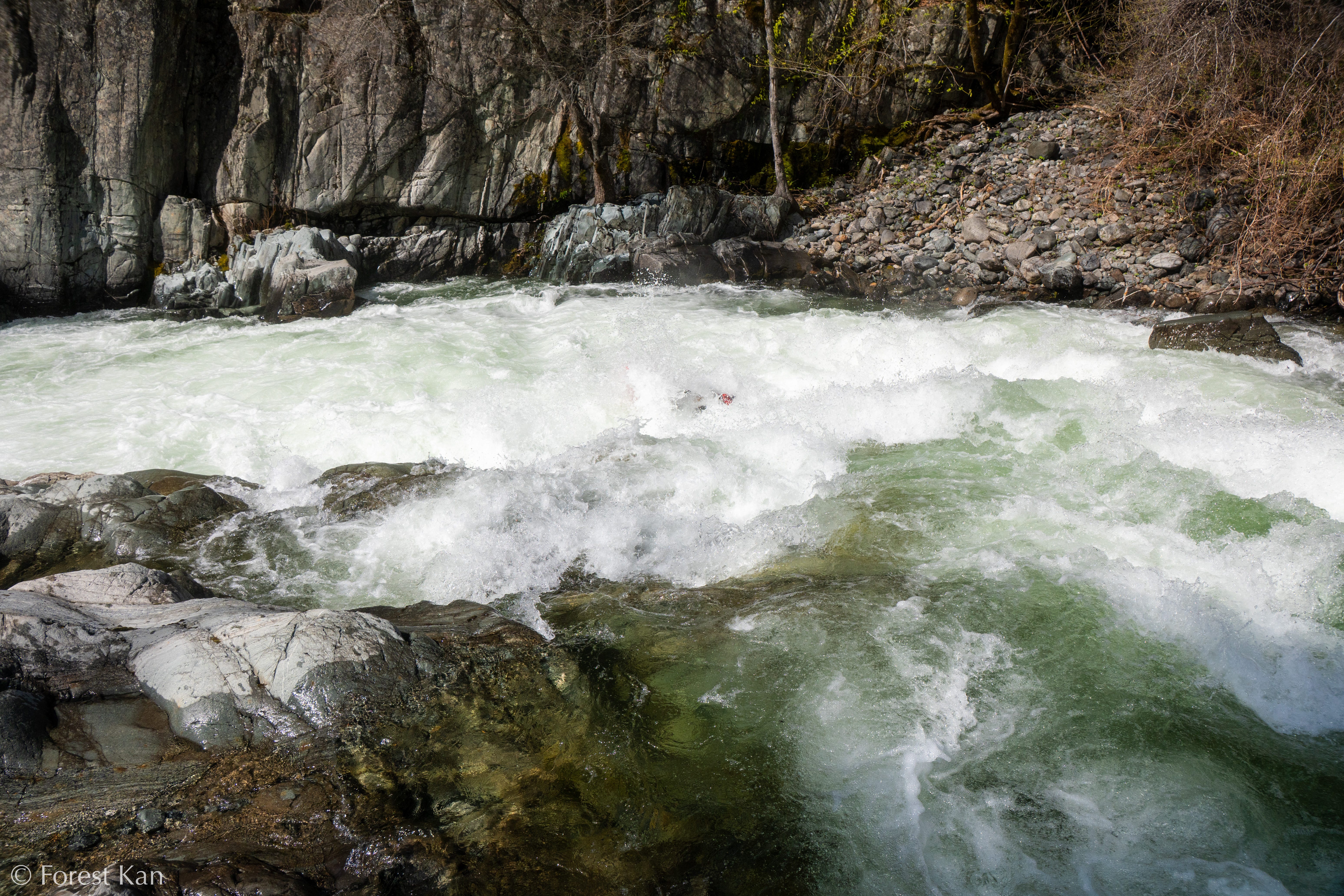
The gorge walls slowly start to rise up out of the forest, and we’re into the first few miles of IV/IV+ that none of the group has ever seen. Each horizon line brings at least one group member out of the boat. I’m sweaty from the exertion, and anxious because of the nature of the run, which requires eyes on rapids to avoid taking the wrong window that could end in disaster.
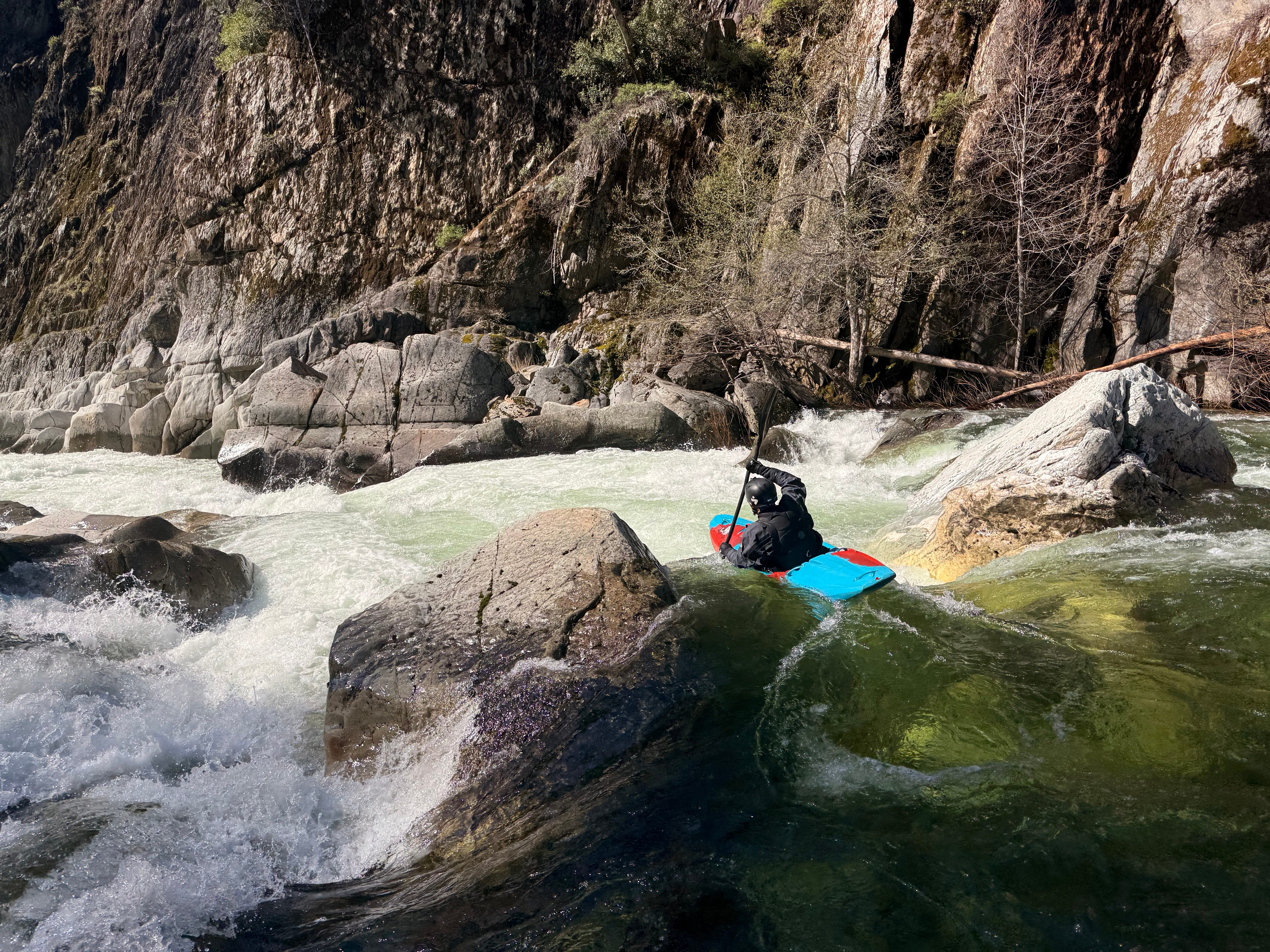
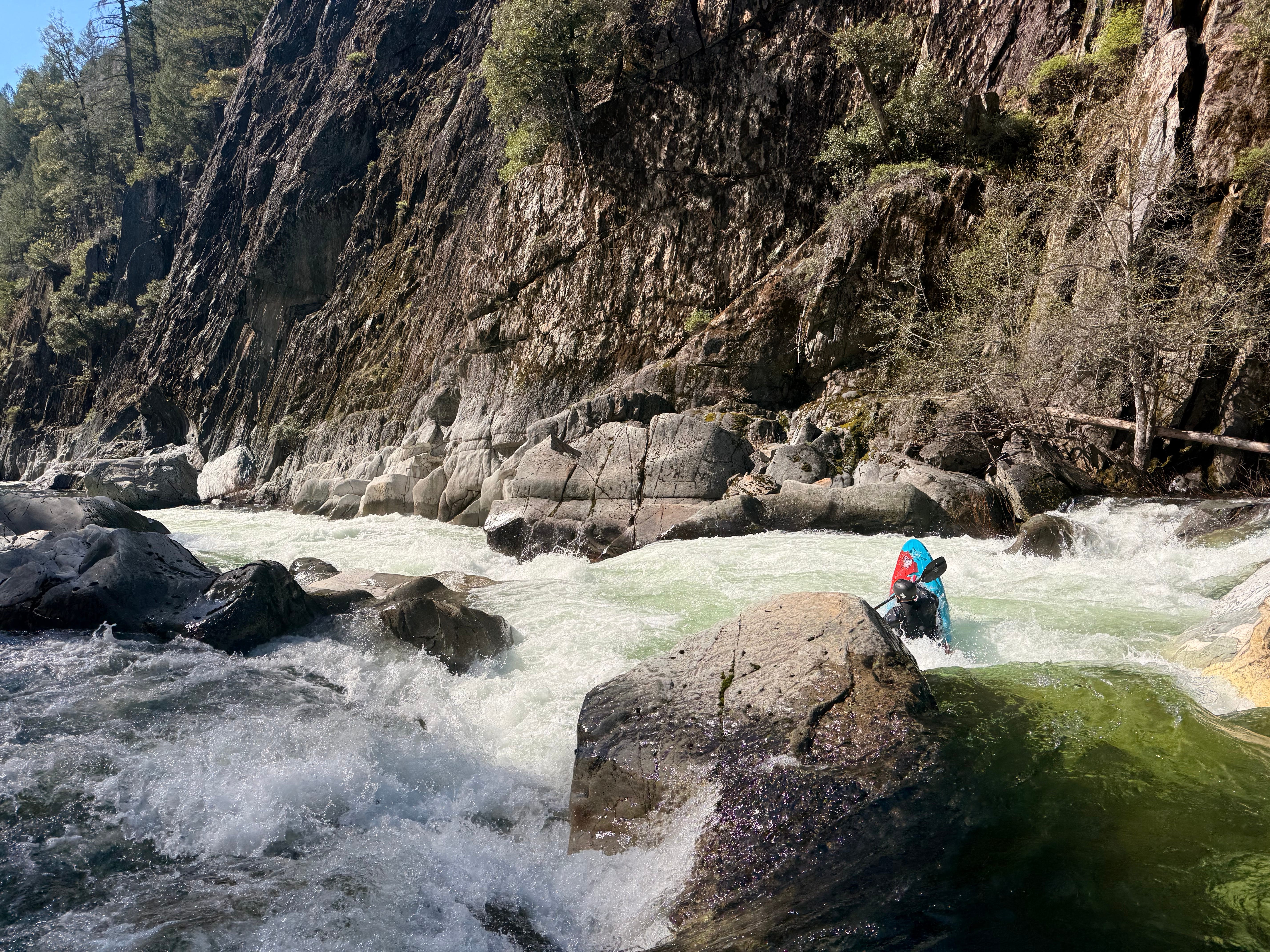
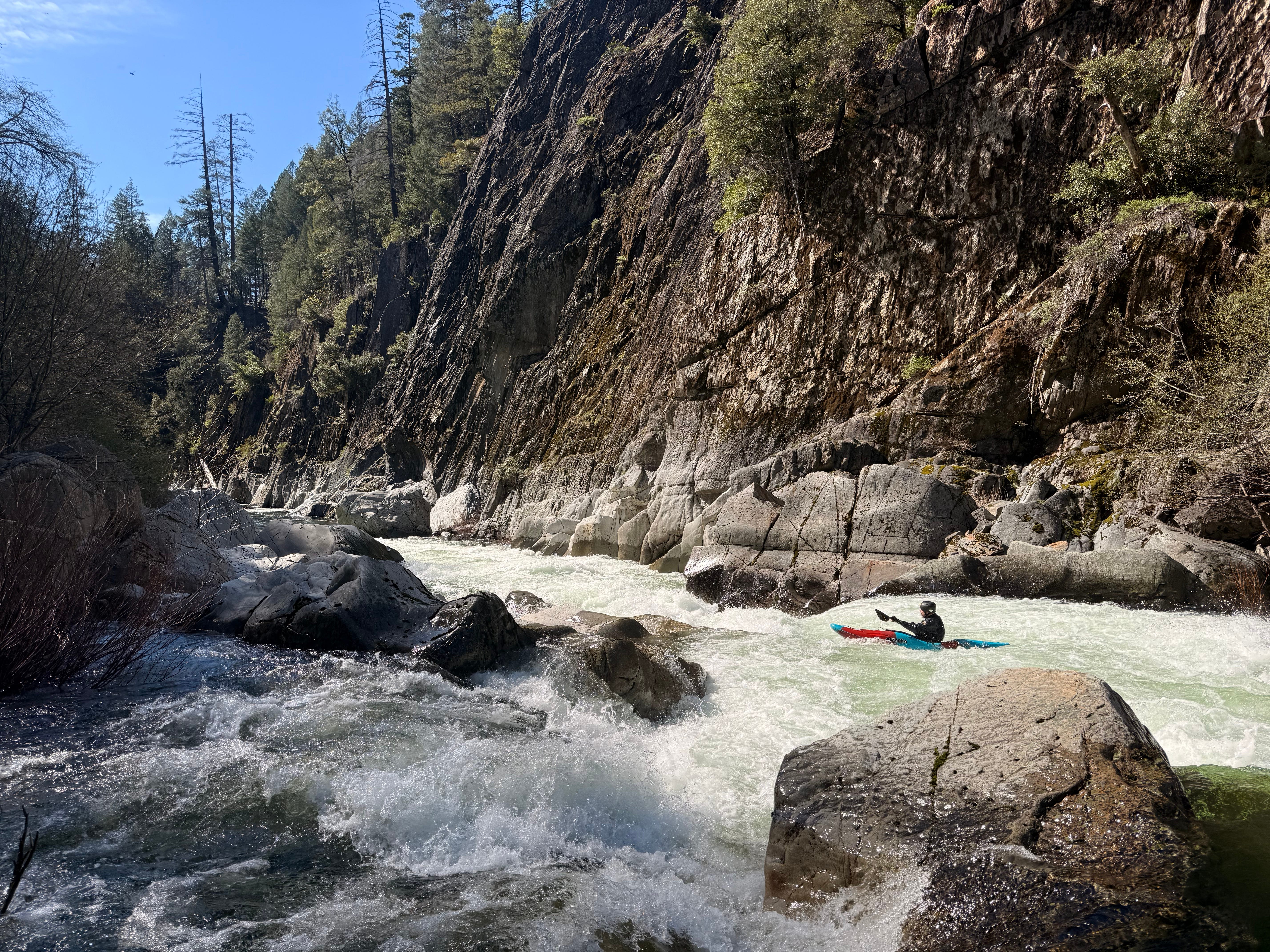
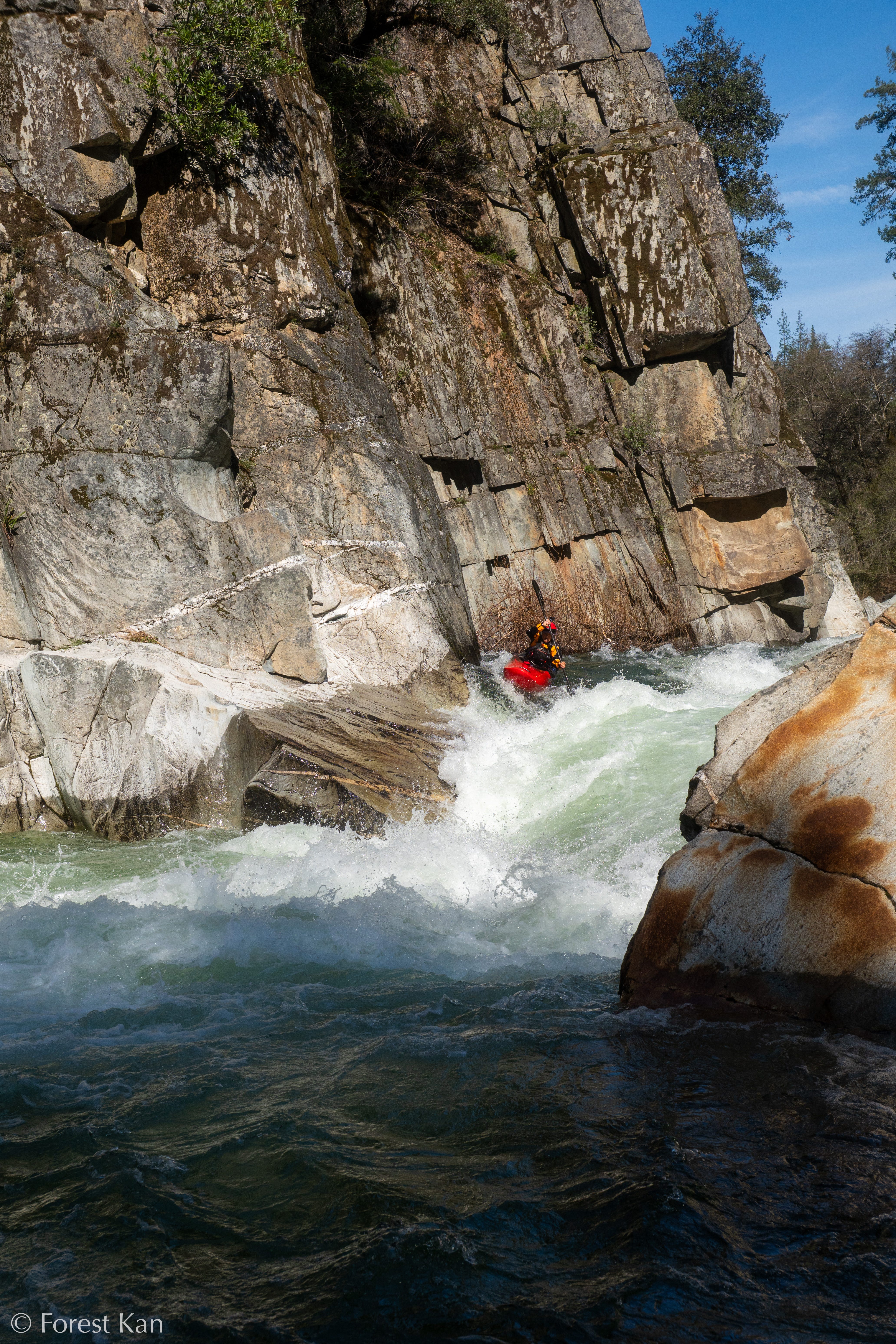
My energy level is dropping but the group is maintaining stoke, with Michael probing lines and saving us from scouting. I can’t remember the amount of times I exited my boat, but it was more than 10 and less than 20. Thankfully no rapids in the Class V range, just a handful of IV to IV+.
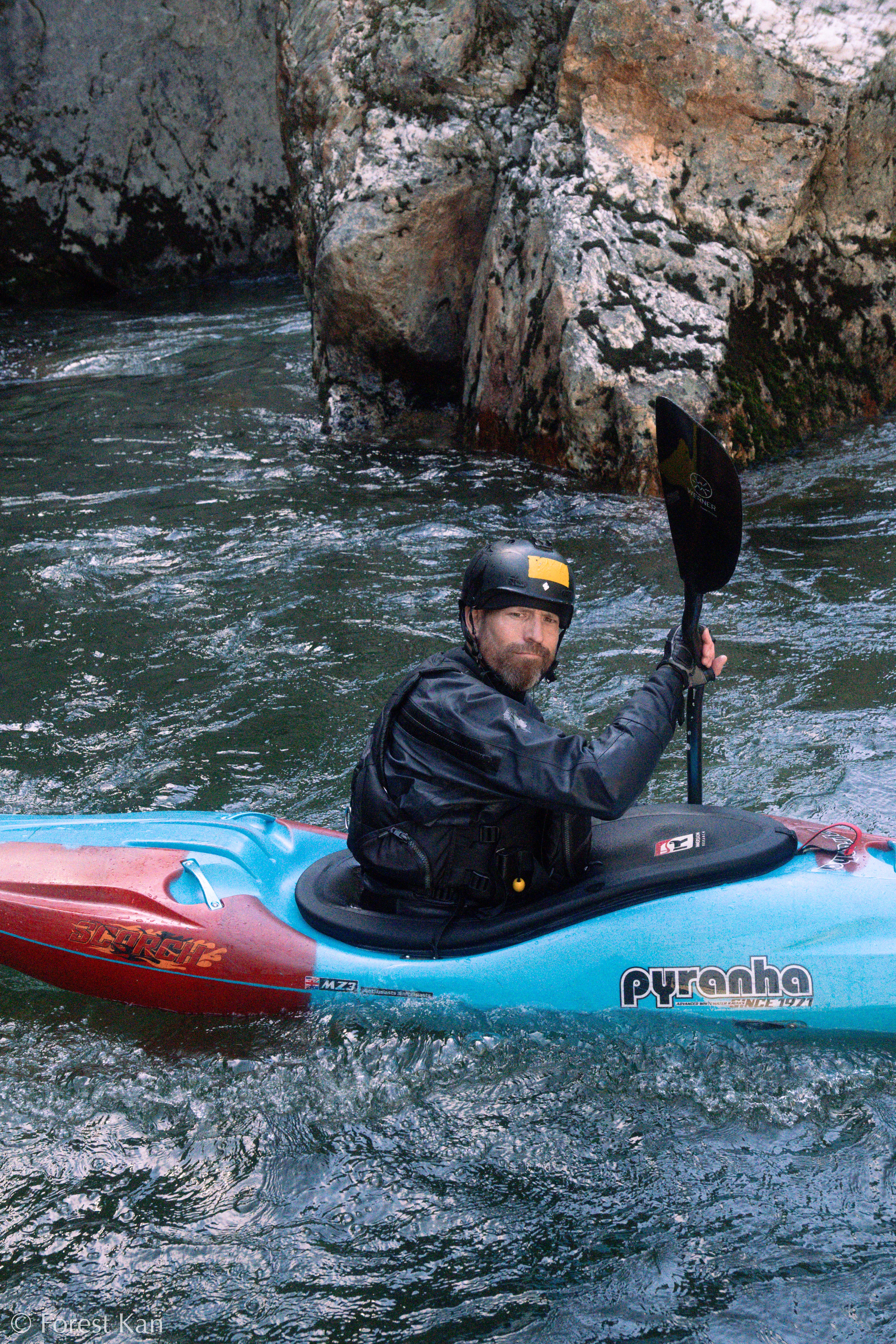
As we make our way slowly down this gorge, light is fading and I struggle to keep fed and hydrated, already tired from a long hike. Eventually the first gorge lets up and the weight of our position sinks into place. We are deep in the backcountry and totally alone. Elation is mixed with anticipation, knowing there’s some sort of IV+ formerly portaged rapid downstream. Adjusting expectations, the team meets and confers, agreeing that we wouldn’t make it past dream gap, and instead start searching for campsites.
Suddenly, the horizon drops away and my inexperience shows itself, hesitating, calculating as I try to figure out where my friends are going down this drop. Indecision induced hesitation leads to some heavy beatering, putting me on my head.
I fire off a quick roll as I feed through the left slot of the former portage, slamming my paddle into a rock just after righting myself. Well, thanks quick roll, you’re unappreciated sometimes. In the eddy we’re all laughs as we discuss how quality of a rapid it ended up being. Not for me, but I could imagine it as enjoyable if upright.
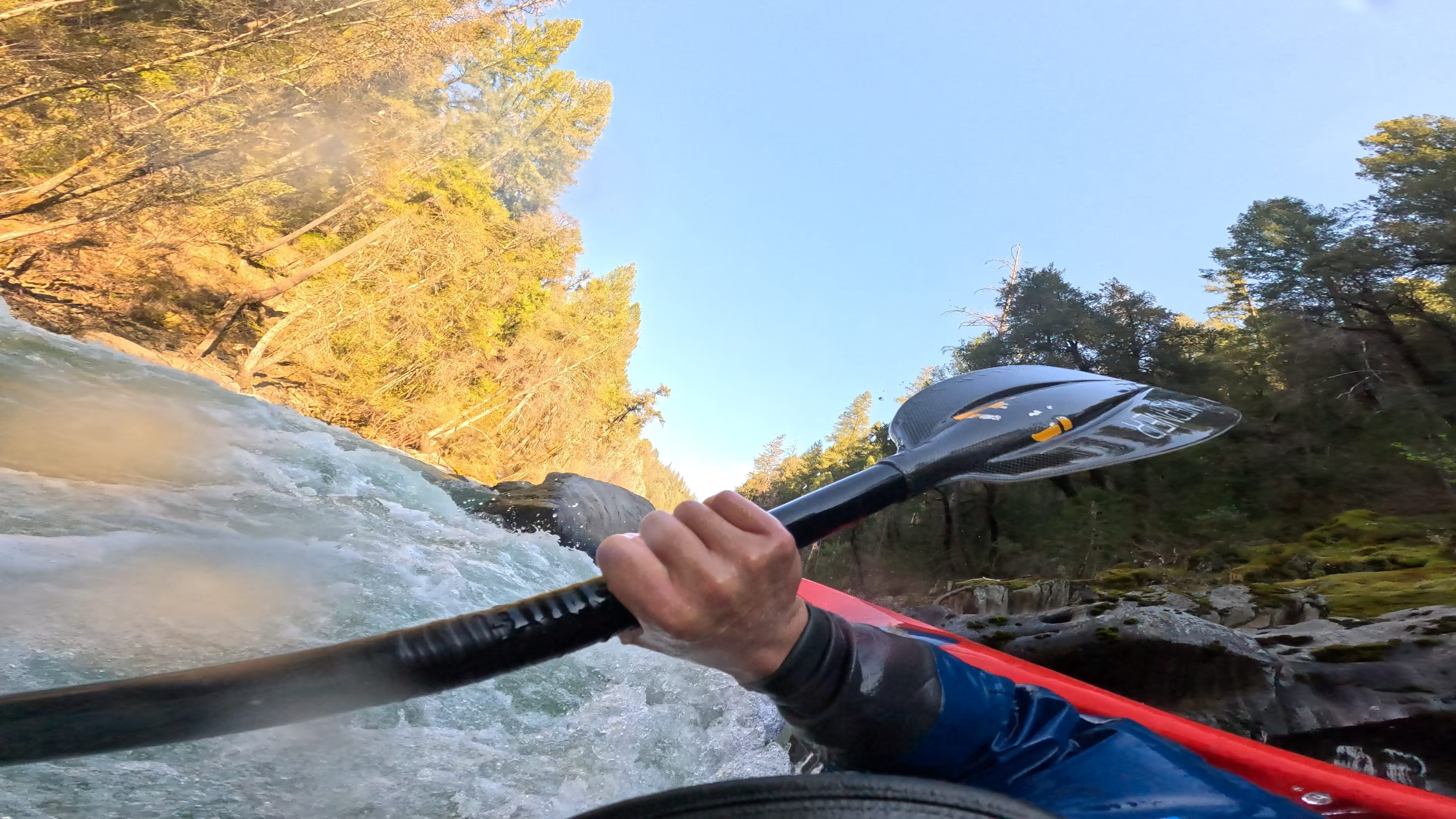
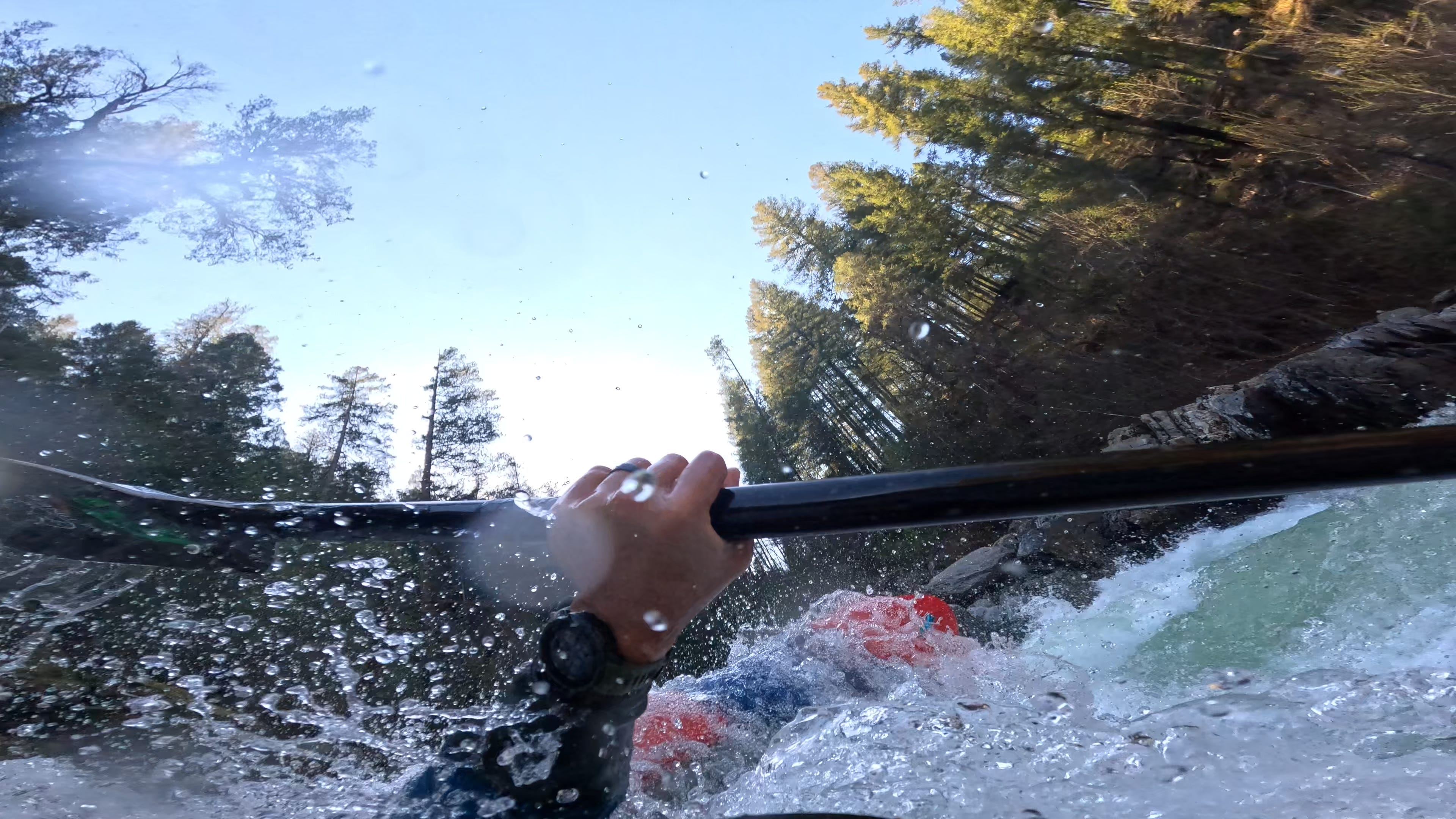
Celebration is short lived as we prioritize finding a campsite. A few camp scouts later and we’re out of luck; there’s no sign of flat ground anywhere. As light fades even more and I start to get cold and clammy, Justin thrusts his arms in the air, rejoicing over a gravel bar in the most improbable location. We’re above Dream Gap, the next committing section of river, with a nice campsite complete with soft sand.
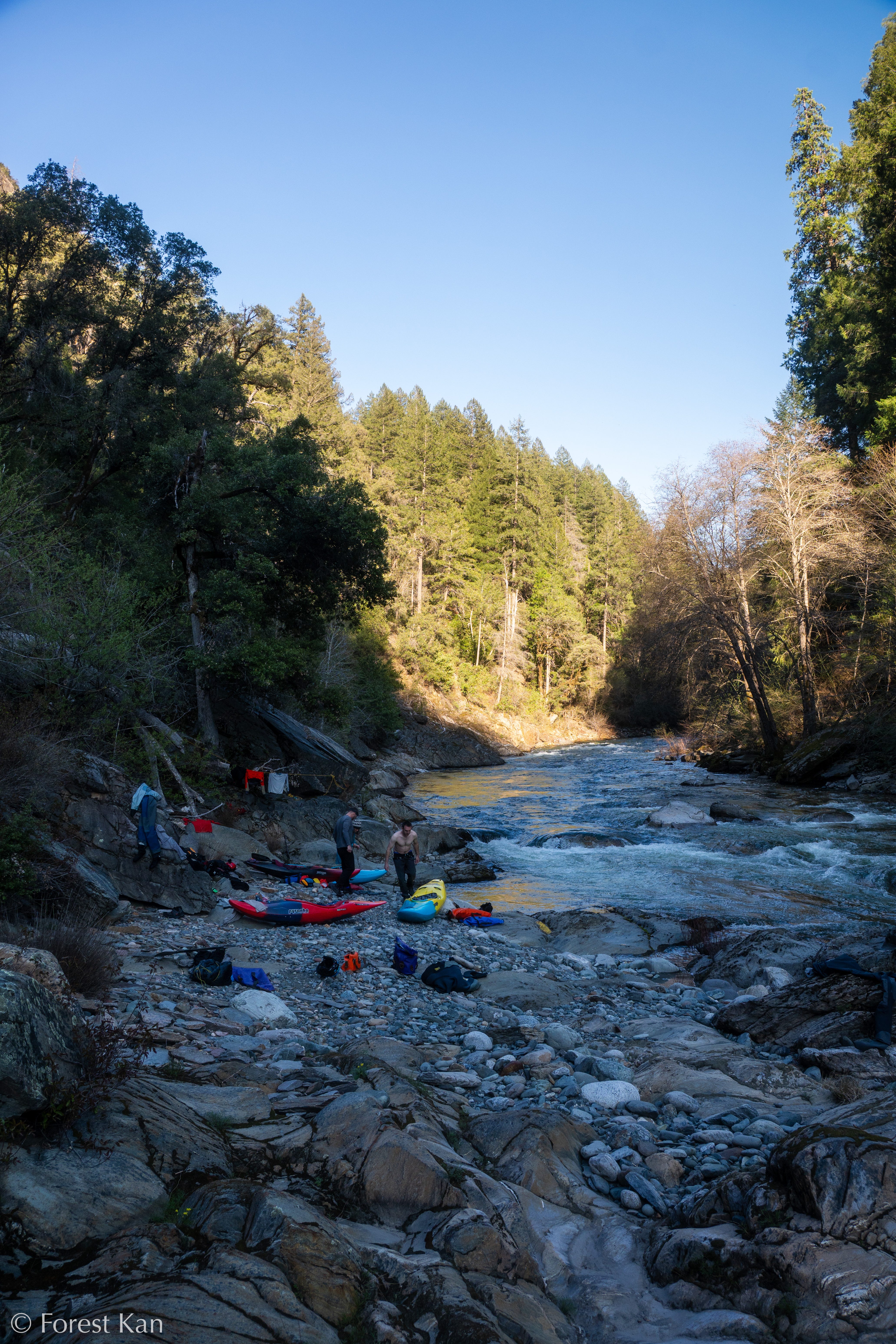
We unpack quickly and get gear spread out to dry, with dinner shortly following. The team revels in the post sunset glow and marvels at the day we experienced, thankful to be done with the heinous hike, but a bit anxious about the next sequence of rapids.
Reading the beta, it’s said that at our flow, there’s a pretty crappy portage to be expected. With this in mind, I drift in and out of sleep the entire night, watching as condensation collects on my sleeping bag, a consequence of camping too close to water.
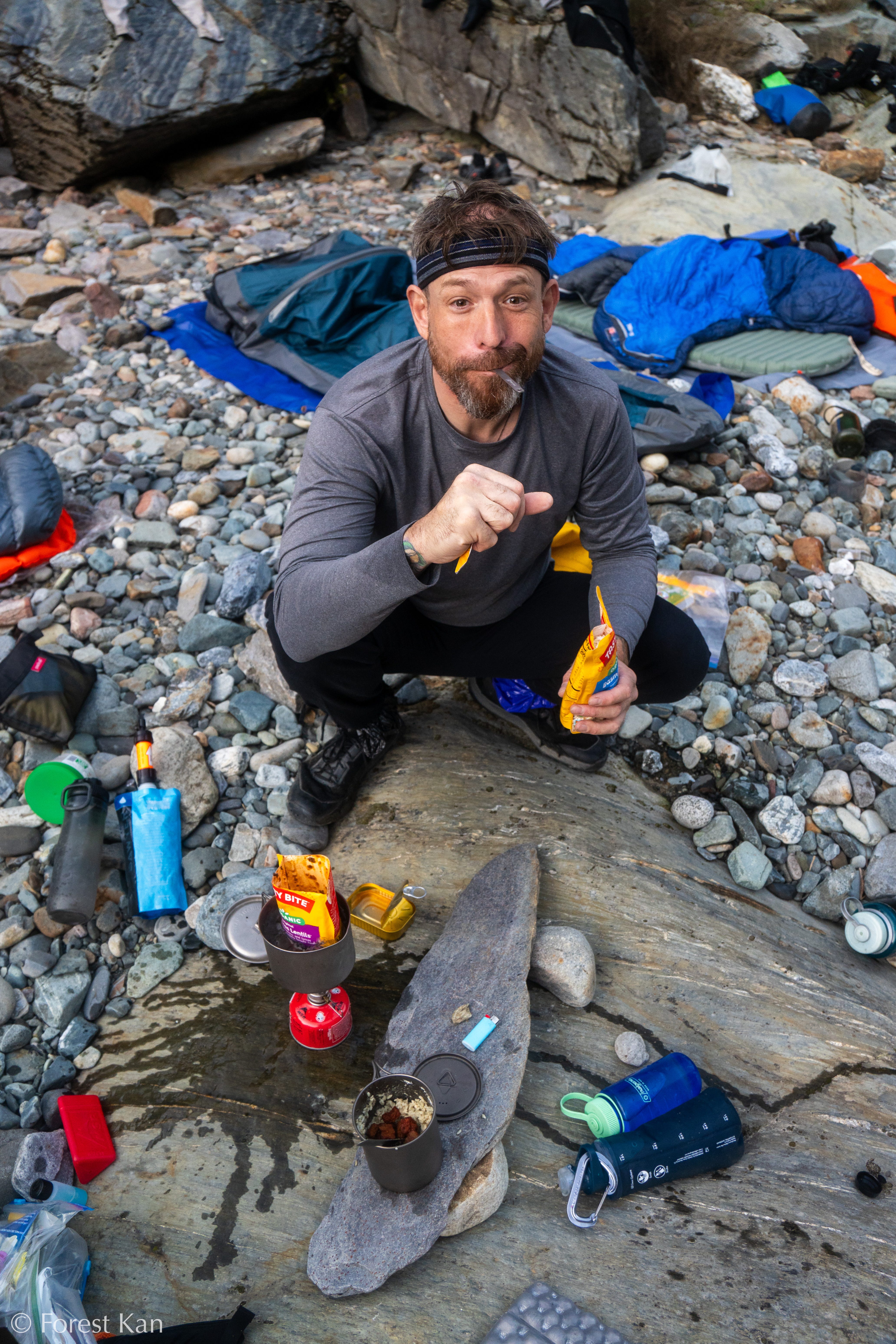
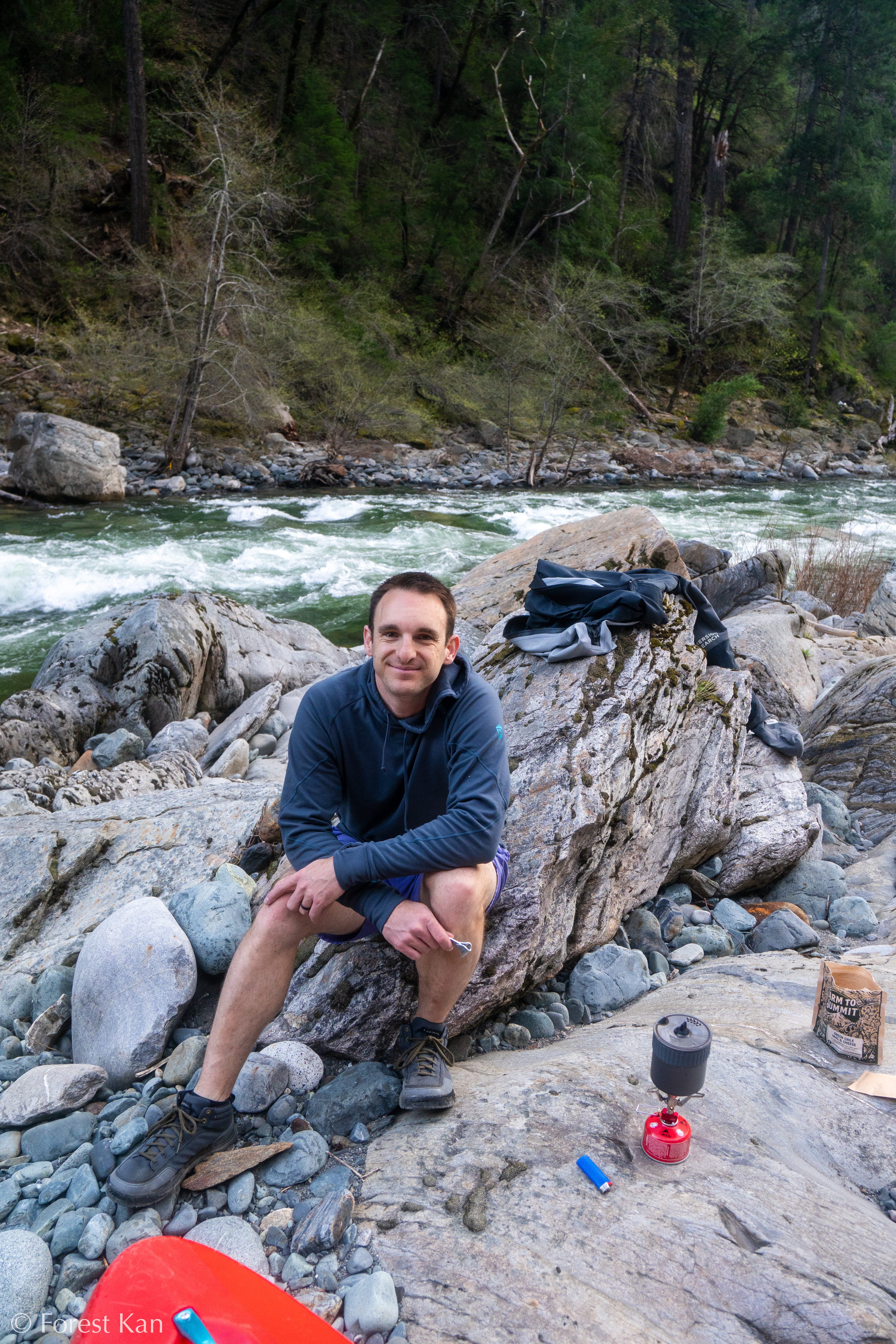
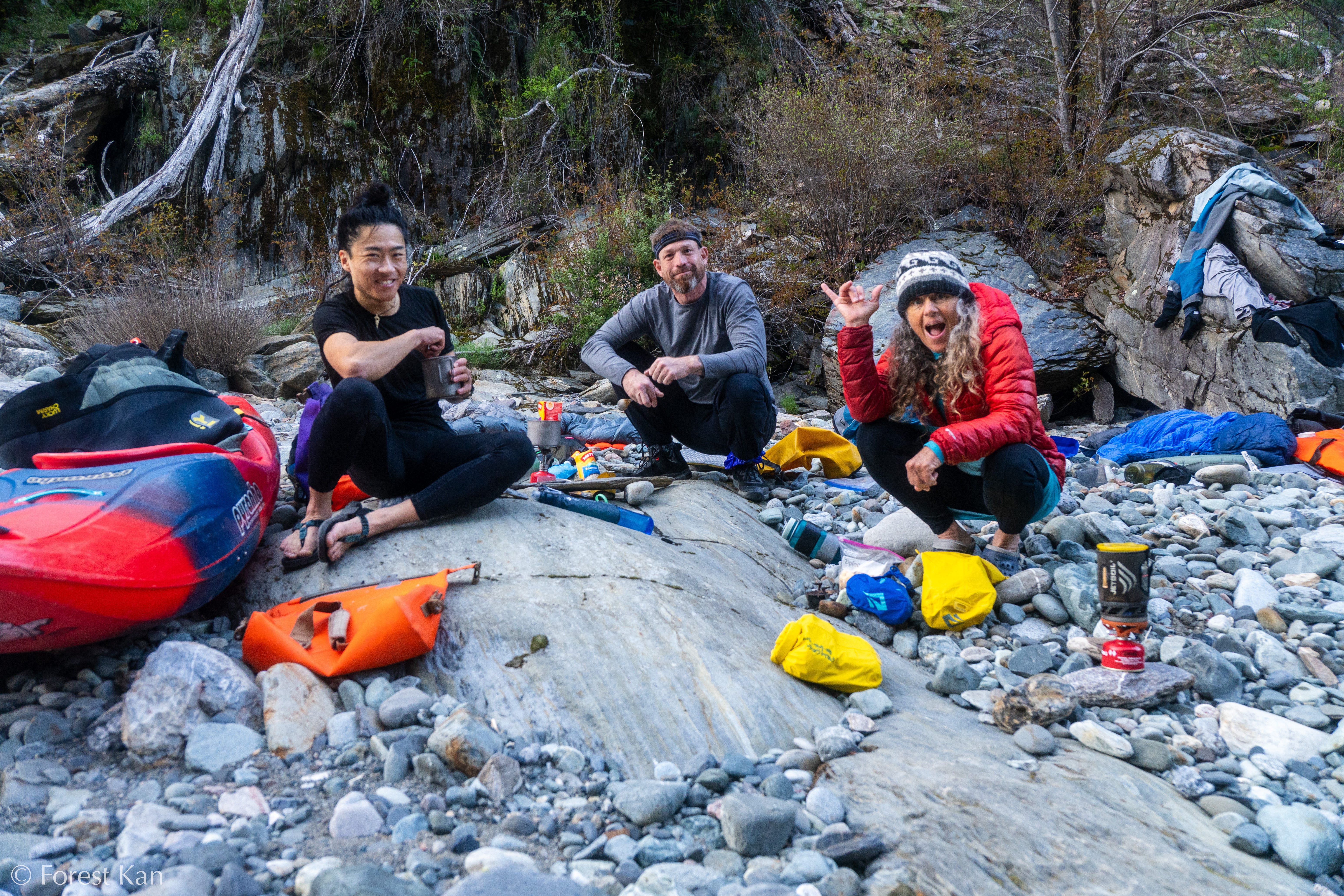
A less than restful night of sleep leads to a chilly morning, though not as chilly as some others I’ve experienced. All of my gear is soaked in condensation, so I quickly grab some sticks to start a small fire and get breakfast rolling.
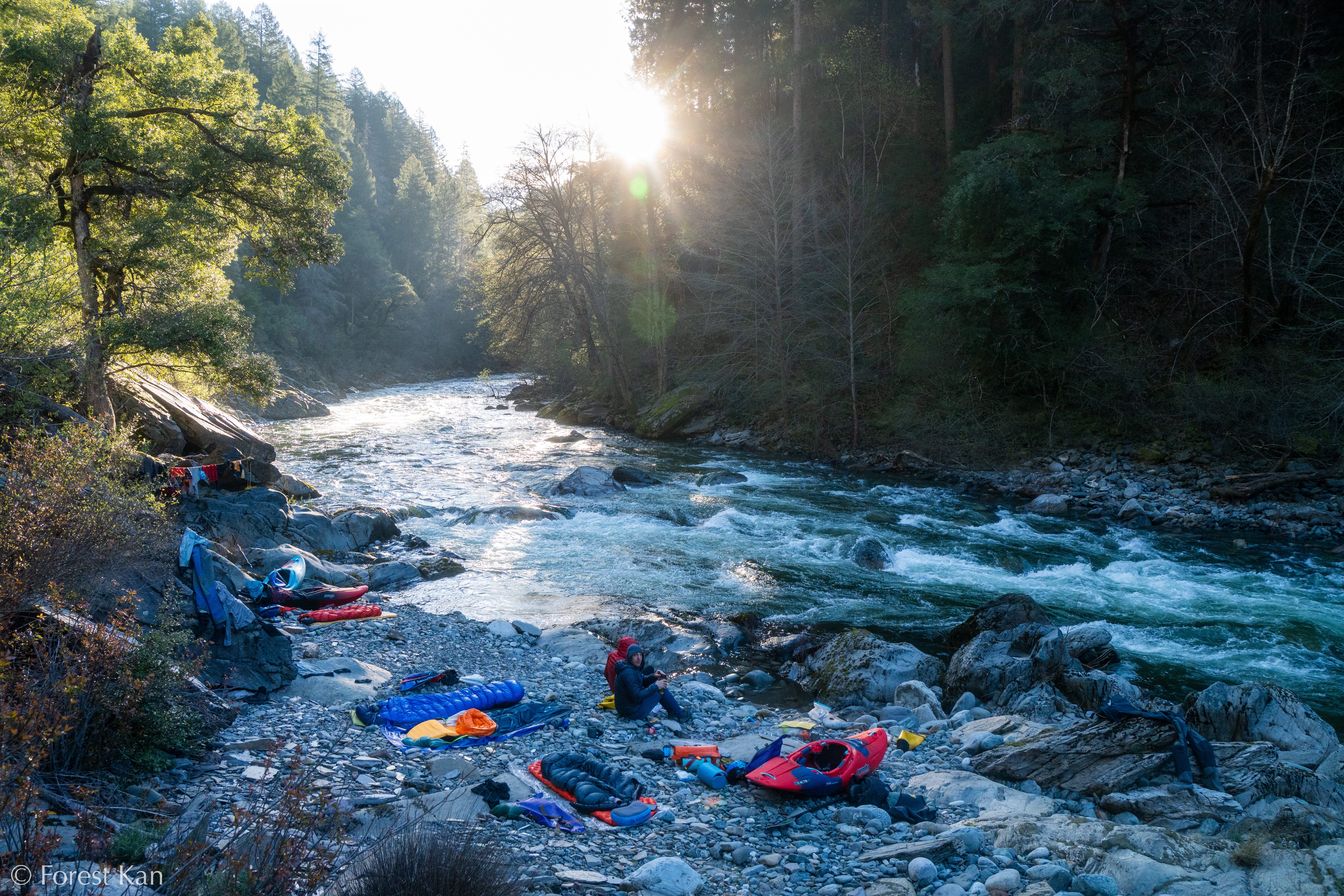
The sun fails to reach our campsite and our gear remains wet, stuffed into our dry bags and into our boats. Off we go into the mellow boogie water, cautiously proceeding downriver, watching for the famed Dream Gap.
Dream Gap, according to the beta, consists of two preamble rapids, and four full sized rapids. At this flow, I fully expect Dream Gap 2 to be a portage. The preamble rapids come and go, with the group moving very carefully as we are fully aware of what lays downstream. A horizon line dictates a scout, where we see we’ve arrived at Dream Gap 0. Though containing significant gradient, the line seems straightforward; left of center to avoid the sieves on river right, then back to center to avoid the nasty rockpile on river left. I volunteer to run it with Justin and set safety, as Dream Gap 0 is very close to Dream Gap 1 and 2. A swim would be significant.
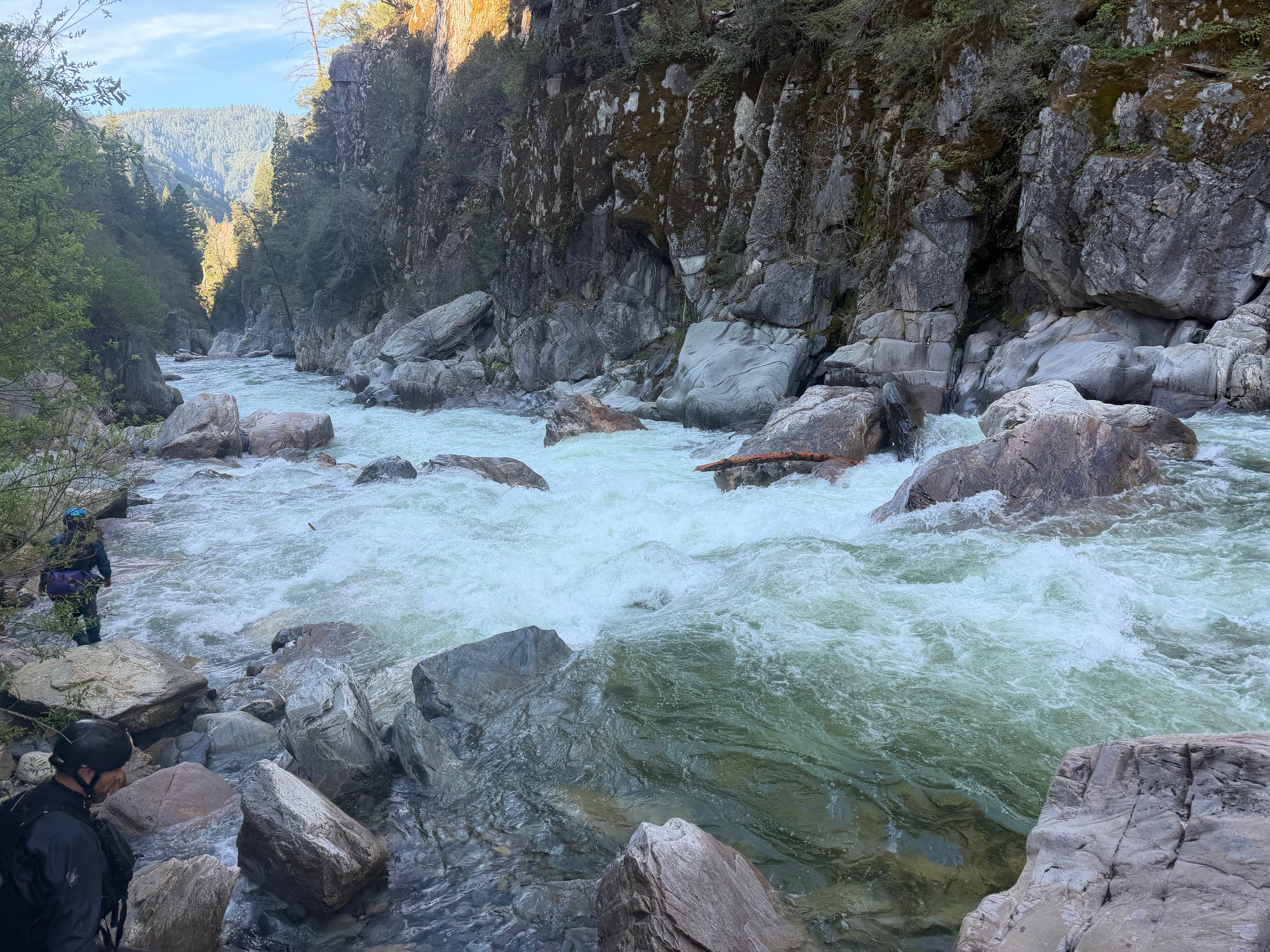
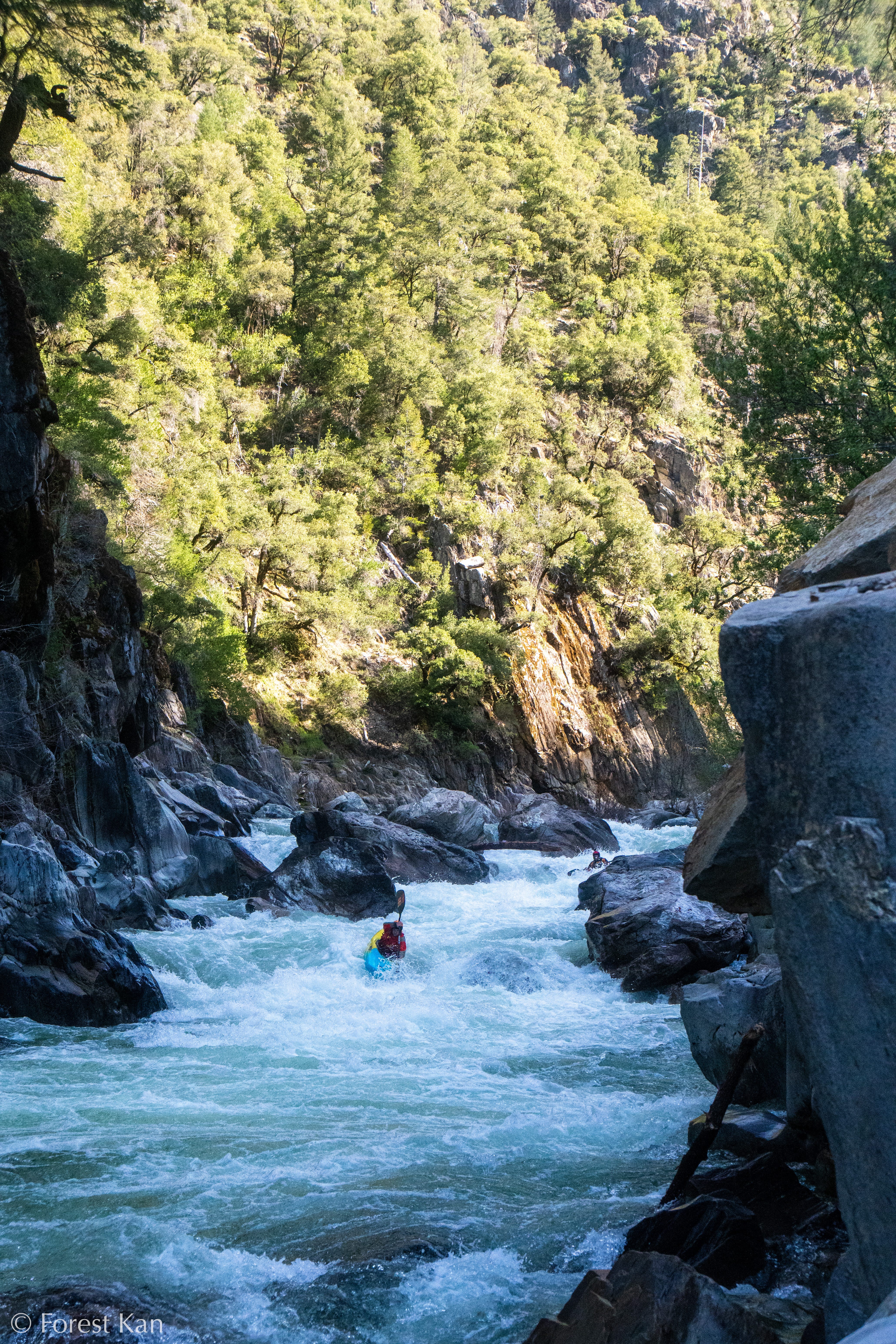
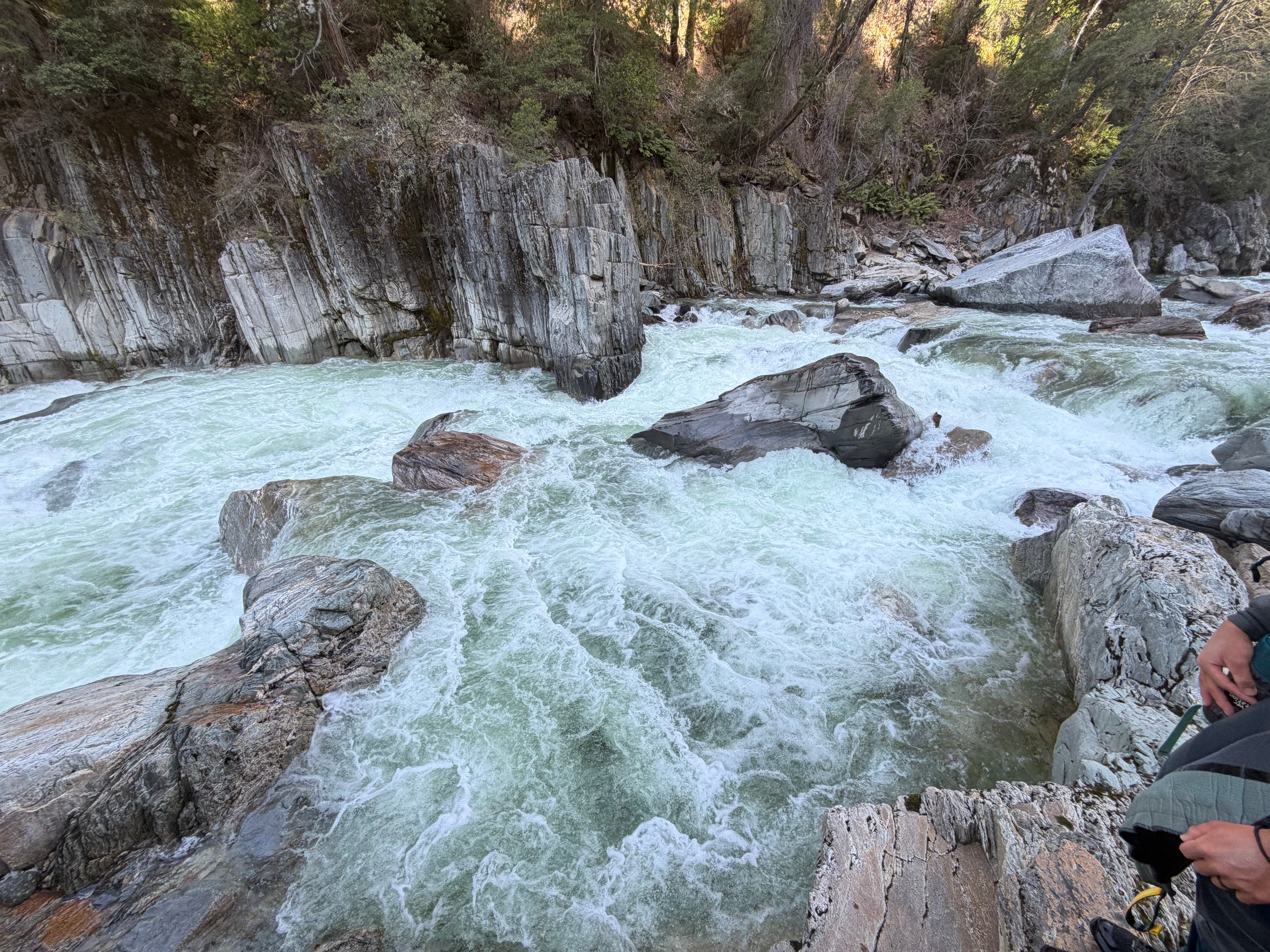
Dream Gap 0 proceeds as planned, and just as quick as the rapid is over, we are scouting Dream Gap 1. At first, the line appears straightforward. Boof a few holes, avoid the sieves on the left and the pocket on the right. For me, my line was high and left, aka the portage. Gap 1 was a 30 second walk, and avoided the potential for compounding mistakes for the group. Michael was the only one who ran Gap 1, of which he said was stout.
Onto Gap 2, and surprise, another scout. This time the scout eddy is small and slippery, and the vantage points covered in brambles. Justin breaks out his trauma shears and starts cutting the thorny vines. I take one look at the rapid and decide to walk; a 20 footer onto rocks seems risky, let alone even getting to the setup. All the other lines are marginal; the beta was right, 200 cfs more water would have made a difference.
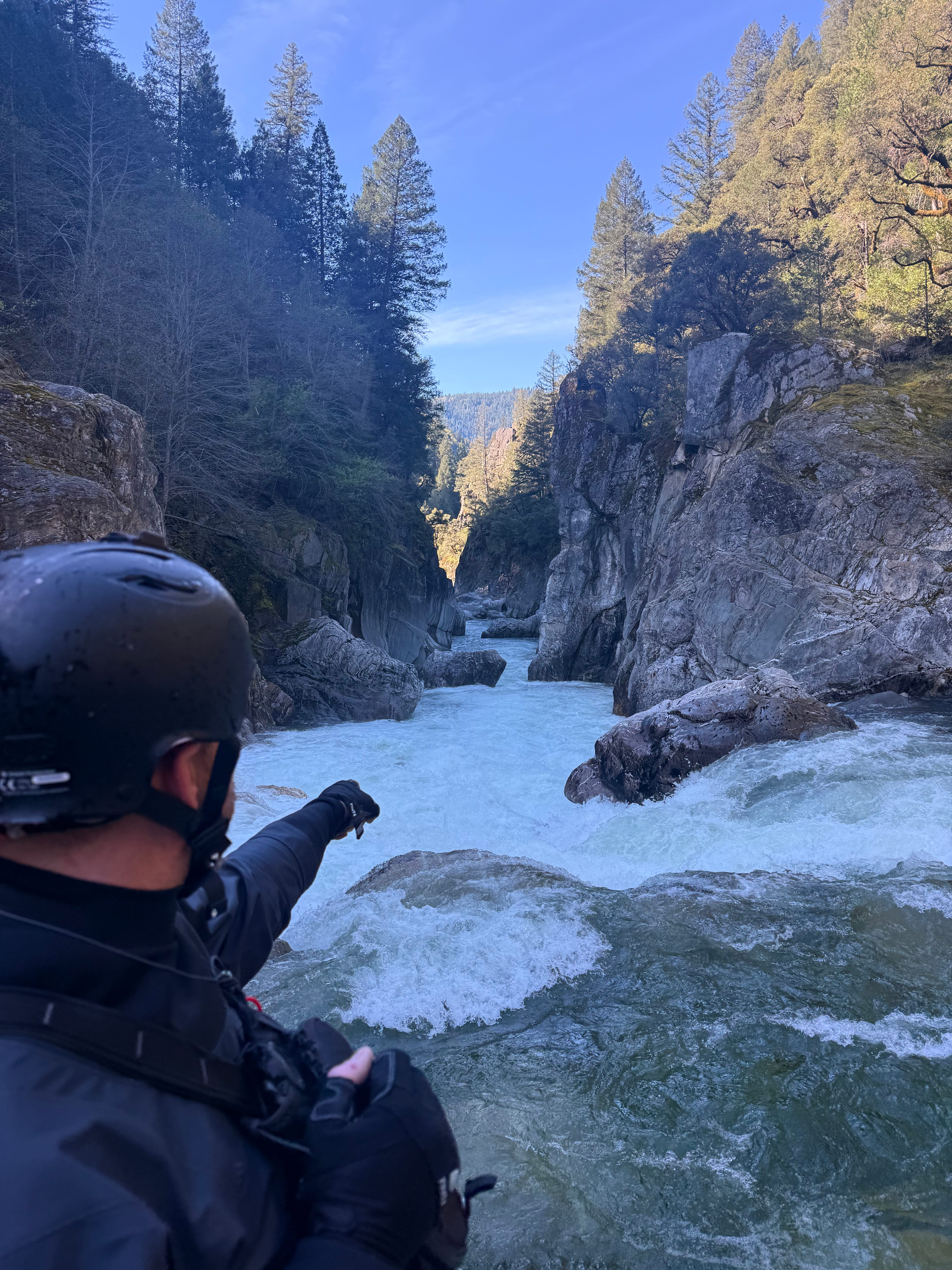
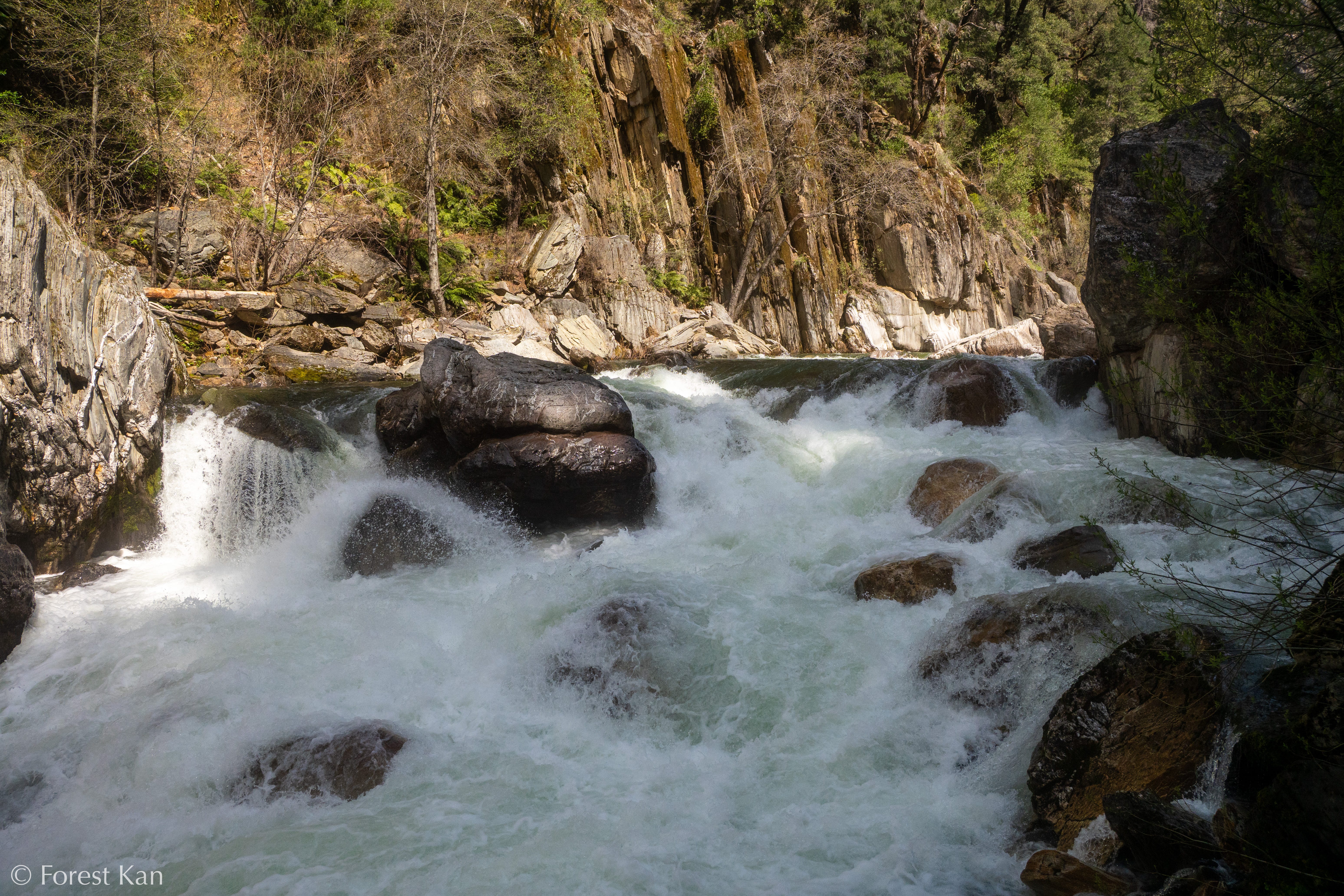
As others pontificate on the line, I announce that I’m starting the portage, knowing it will be full on. I know from the beta that the portage is possible, just time consuming and difficult. The line of least resistance, from what I can see, still contains a lot of resistance. Thickets of blackberry brambles, and a 20 foot drop into the portage rapid become the uphill battle. Nonetheless, it is better than running this choss pile.
FUCK! I scream in my head…
Slowly the group coalesces around our scattered gear, happy to be through the worst of the brambles. We take a second to snack and express thanks for the crew, the vibes, and the place we are existing within. An hour a half. That’s the time it took to move just a 100 feet downriver.
Maybe running the choss wouldn’t have been so bad...
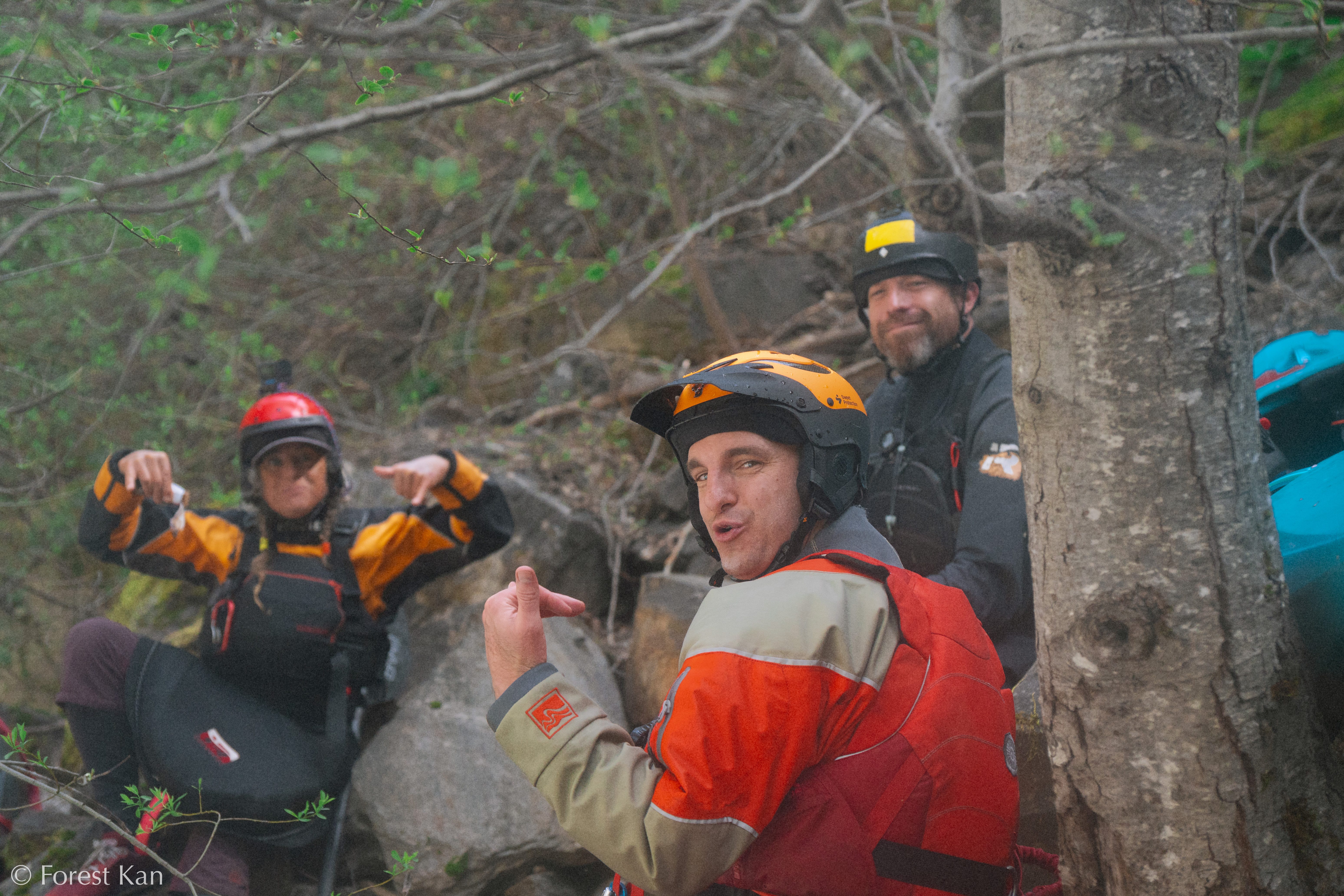
We methodically put in below Dream Gap 2 and run Gap 3, which turns out to be barely class III. A short section of read/run class IV is easily dispatched by our probe unit in charge, leading us to several miles of class II.
I lament how much of a relief it is to be able to see the bottom of rapids for once, and how nice it is not to scout.
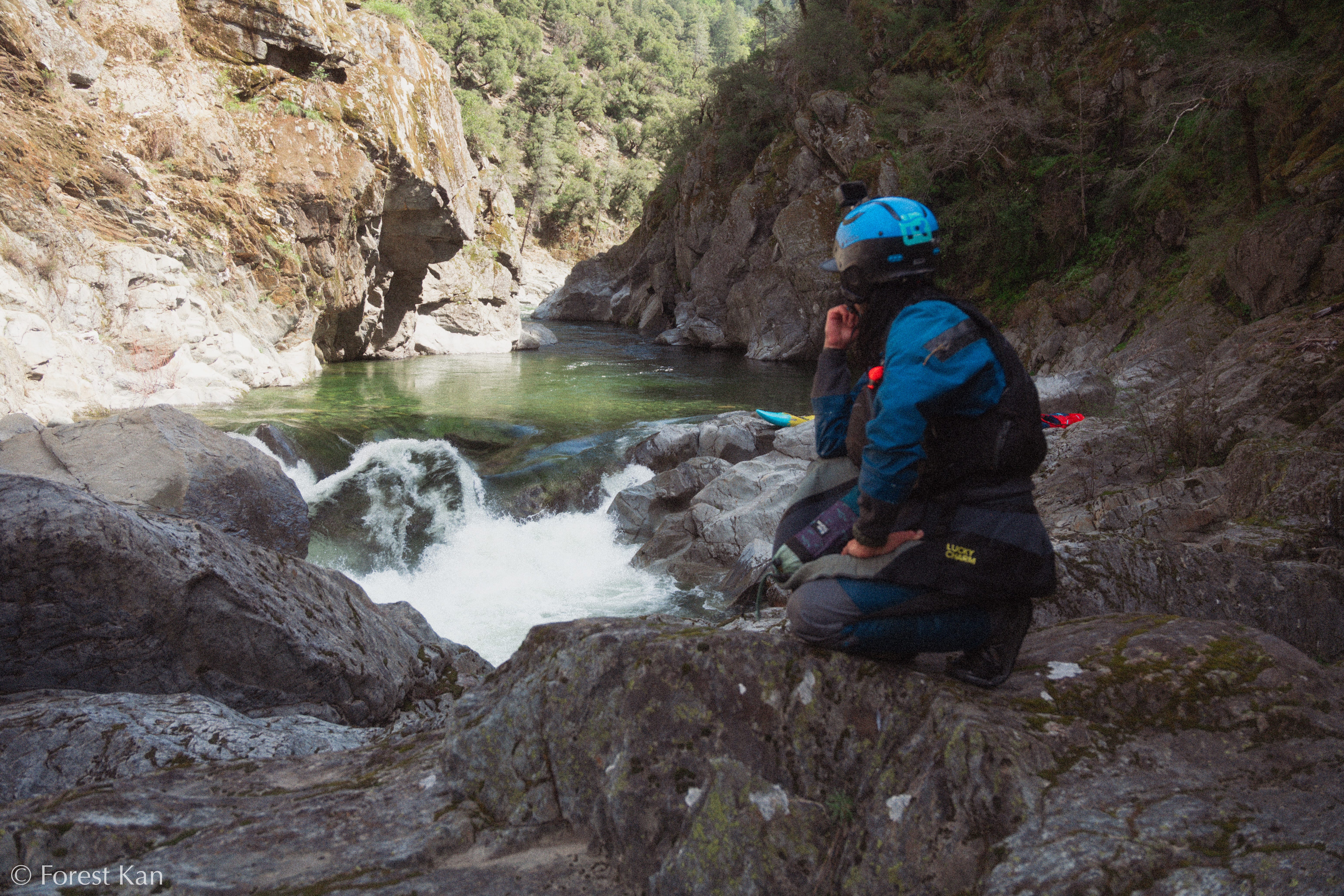
Before Giant Gap, one last Class V: F-14. Easy scouting leads me to an easy decision of a half portage, taking out the nasty piton rock next to a hole INSIDE of a sieve.
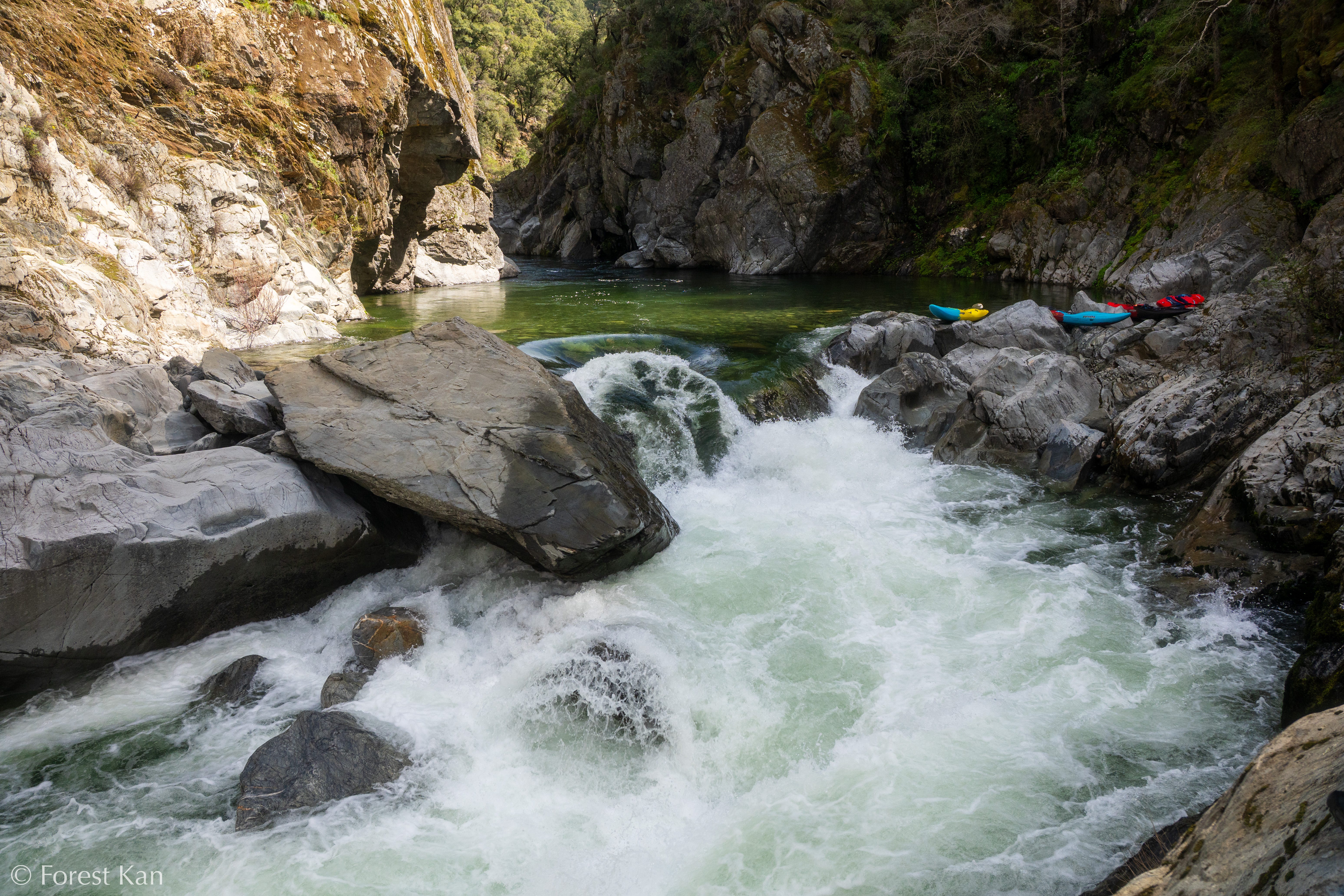
We reach Giant Gap and it’s a strange feeling to arrive at the put in of a classic run, on the opposite side of the bridge. We make light work of the first half, until Dominator in which our fearless probe gets turned around and beat down in the right side hole, leaving us with a swimmer to rescue.
Take out brings a flood of emotions, mainly happiness at being able to experience such a wonderful trip. The hard work, sweat, and near tears all feel worth it. I leave the run with a feeling of joy, thankful for everything in this life that allows me to experience such things.
Hard work? Yes. Worth it? Also yes.
Oh no. Straight into the demented portage from Hell!
Trips like this will make you into a super probe...relentlessly pulling over and scouting at some point becomes an energy drain and you start to appreciate that mad bombing down blind drops is a fairly sound strategy for longish sierra runs. It usually works out that your instinct knows what to do in most cases once you drop in...